
Signs of Rats in the Walls from Drains and Where to Look
A rat in a wall may have entered through a drain, but scratching or squeaking alone doesn’t prove that the drainage system is the source. The clearest signs of rats in the walls from drains include noise near pipework, droppings or gnaw marks, foul smells, and activity around toilets or ground-floor rooms. Cracked pipes, defective joints or damaged chambers can provide a route into a property.
It’s understandable to suspect the drains when signs appear near a bathroom or under the floor, but rats can enter through other points too. This guide explains how they may travel from drains into a home, where to look for clues, and how to distinguish rat droppings from mouse droppings. It also covers how drain maintenance, repairs and a CCTV survey can help identify and address possible entry routes.
Table of Contents
How Do Rats Get Into Your Drains?
Rats can travel through drainage systems and enter buildings where damaged pipes, open connections or faulty toilet routes leave a gap. Scratching inside walls may fit this pattern, but it doesn’t prove a drain is the source.
Drain Activity and Entry Signs
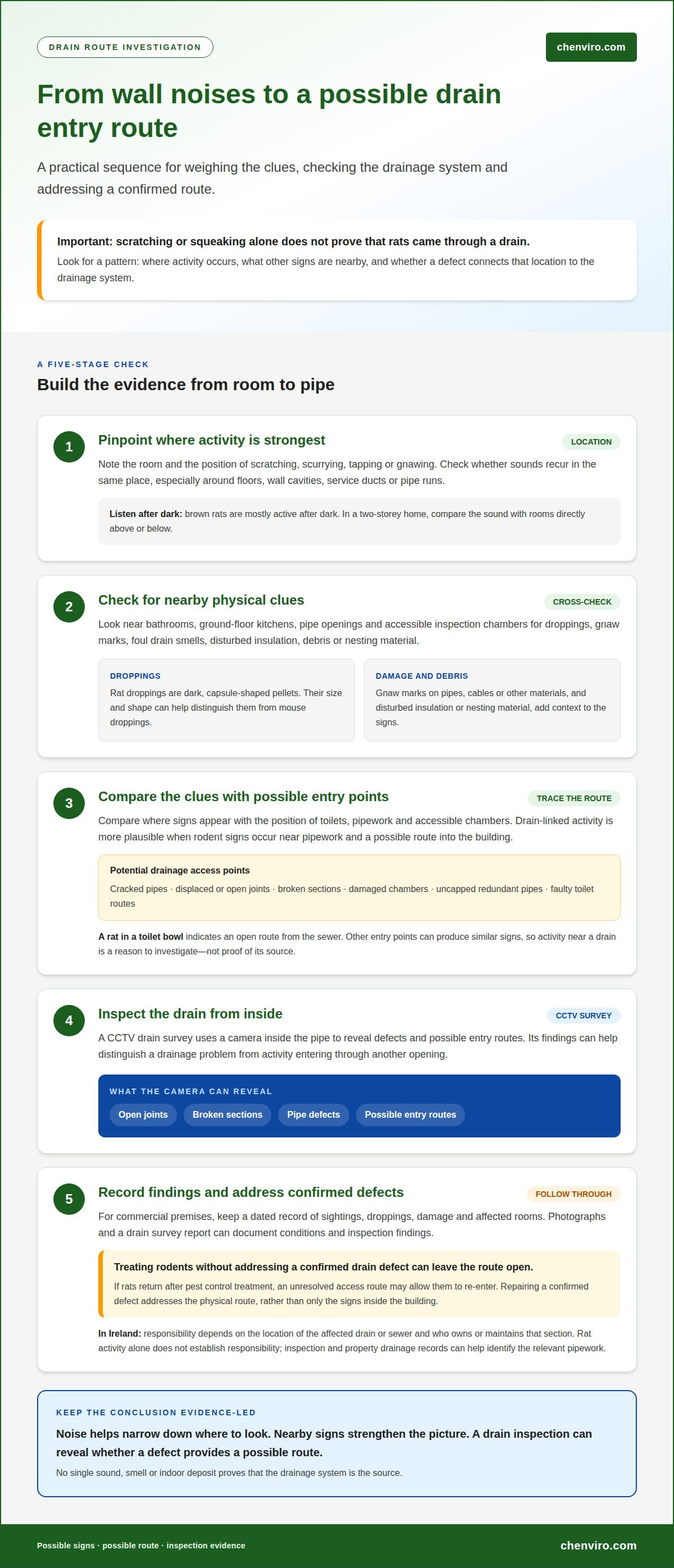
Drain-linked activity means rodent signs near pipework combined with visible defects along a possible route into the building. Look for foul drain smells alongside droppings or gnaw marks near a bathroom, ground-floor kitchen, inspection chamber or pipe opening. Cracked pipes, displaced joints, damaged chambers and uncapped redundant pipes can create entry points. A rat in a toilet bowl indicates an open route from the sewer.
Scratching or scraping beneath floors, in wall cavities or around service ducts can suggest movement near pipe runs. Disturbed insulation, debris or nesting material may provide further clues. Rats can also gnaw pipes, cables and other materials, causing plumbing or wiring concerns and potential exposure to disease. Activity close to a drain makes that route worth investigating, but other access points can produce similar signs.
Checking for a Drain or Sewer Source
To assess whether rats are coming from a drain or sewer, compare where the signs appear with the position of pipework, toilets and accessible chambers. A CCTV drain survey uses a camera inside the pipe to reveal defects, open joints, broken sections and possible entry routes. Its findings can help distinguish a drainage problem from activity entering through another opening. Scratching alone can’t identify the source.
For commercial premises, keep a dated record of sightings, droppings, damage and affected rooms. Photographs and a drain survey report can document conditions and show where an inspection found defects. If rats return after pest control treatment, an unresolved access route may allow them to re-enter. Treating rodents without addressing a confirmed drain defect can leave the route open.
In Ireland, responsibility depends on where the affected drain or sewer is located and who owns or maintains that section. Rat activity alone doesn’t establish responsibility; inspection and property drainage records can help identify the relevant pipework. Where a defect is found, repairing it addresses the physical route, rather than only the signs inside the building.
Where should I look for signs of rats?
Brown rats are mostly active after dark, so listen when household noise has settled. The location and pattern of sounds can help narrow down where activity is occurring.
Night-time Wall and Ceiling Sounds
Night-time scratching or scurrying is movement heard behind ceilings or walls after dark. It matters because the sound’s position can help distinguish activity in a ceiling void from movement near a wall or floor. Note which room the noise comes from and whether it returns in the same place. In a two-storey home, compare the sound with rooms directly above or below it.
Scratching in Floors and Wall Cavities
Scratching beneath floors or inside wall cavities can point to movement in hidden spaces, including subfloors and service ducts. Check where the noise is strongest, such as beside a floor edge, an internal wall or a pipe route. Rats entering buildings through drains may reach these spaces, as well as basements or attic areas. A sound near ground level can focus attention on nearby voids, but doesn’t identify its source by itself.
Tapping and Gnawing Noises
Tapping, gnawing and scurrying can add detail to a pattern of indoor activity. Listen for repeated sounds in the same section of ceiling, wall or floor, then note the room and time. Gnaw marks on visible wood, plastic, packaging, pipes or cables can support a suspicion of rodent activity. Look along accessible edges and around stored items rather than opening walls based on a noise alone.
Compare these observations with visible signs nearby, such as disturbed insulation or debris around an access point. A recurring sound beside a service route is a reason to investigate that area further, not proof of a drain entry. If the pattern suggests hidden pipework may be involved, a CCTV drain survey can help inspect the drainage system from inside.
Rat droppings and distinguishing them from mouse droppings
Droppings are a useful clue, especially beside food storage or along room edges. Their size and shape can help distinguish rats from mice, but droppings alone don’t show whether activity began in a drain.
Identifying Rat Droppings
Rat droppings are dark, capsule-shaped pellets, commonly found along skirting boards, in corners, under kitchen units or near stored food. Their location matters: repeated deposits beside one edge may mark a regular route through the room.
Look for other nearby clues, such as gnawed packaging, grease marks along surfaces or nesting material in soft insulation and cardboard. A strong musky or ammonia-like smell in an enclosed space can add context. Noises inside wall cavities or beneath floors may occur alongside these signs, but smell or sound alone can’t identify the pest.
Rat and Mouse Dropping Differences
Size is the clearest quick comparison: rat droppings are generally 10-20 mm long, while mouse droppings are typically 3-7 mm. Rat pellets look larger and capsule-shaped; mouse pellets are smaller. Comparing several droppings gives a more useful indication than judging one pellet in isolation.
How can you distinguish rats from mice or other pests in walls? Compare the size and shape of droppings, then check whether gnaw marks, grease trails or nesting material are nearby. Noises and odours can accompany rodent activity, but don’t reliably identify the animal on their own.
During an inspection, note whether droppings recur in the same place and whether visible smear marks follow a wall or edge. Rat smear marks may appear on chamber walls, around 30-50 mm above the benching. That detail can help an engineer assess activity near drainage infrastructure, but deposits indoors still need to be considered alongside other evidence.
Rat activity can cause unpleasant smells and potential exposure to disease, while gnawing may damage surfaces, pipes or cables. Assess droppings, urine-like odours, noises and damaged packaging together. If signs persist, record their locations and timing. A pattern beside pipework or an inspection chamber can help direct further investigation.
Drain maintenance and rat prevention
Drain maintenance helps reduce defects and food sources that may attract rats. If you notice signs of rats in the walls from drains, consider both the condition of the pipework and what enters it. Drains connect properties and can offer food or shelter, so sound pipework and careful waste disposal both matter.
Keep inspection covers secure and undamaged, and arrange prompt attention for cracked pipes or displaced joints. A structural defect can leave an access route from the drainage system into a building. A CCTV drain survey can locate fractures, open joints and other hidden defects, helping establish whether repairs are needed. Not every infestation starts in drains, so check external holes, damaged air bricks, door gaps and garden shelter too.
Food waste can attract rodents into drainage systems. Avoid flushing food scraps down toilets or washing them into sinks, and keep bins sealed. Fats and grease poured down a sink can also attract rodents, so dispose of them without sending them into the pipework. These habits reduce food sources, but they won’t repair a broken drain or close an existing route.
Where an inspection identifies a defect, repair the damaged section or joint to remove the structural access route. A rat flap or non-return valve can help block rodents from moving through a pipe while allowing water to pass. The suitable measure depends on the drain layout and defect location. Sealing gaps around pipes, walls or vents can address separate entry points.
Recurring activity after pest treatment calls for attention to access as well as shelter. Check whether drain defects remain, while also considering garden harbourage and waste storage. A pattern of signs of rats in the walls from drains makes inspection of the pipework a practical next step. A CCTV drain survey can identify damage that may need repair, rather than treating every rat problem as a drainage issue.
CH Enviro
CH Enviro can investigate whether a drainage defect may be allowing rats to enter a property. A CCTV Drain Survey examines pipework from inside, helping identify cracks, displaced joints or other damage that could provide an access route. If the survey identifies a structural problem, No-Dig Drain Repair can address certain defects without replacing the entire drain. A Drain Unblocking Service can help where a blockage also needs attention.
These drainage services are relevant when signs indoors occur near pipework, toilets or inspection chambers, or when activity returns and a drain defect is suspected. They focus on the drainage route, rather than treating every possible cause of rodents inside a building. The findings can help clarify whether drainage work is the appropriate next step.
Contact CH Enviro to discuss the signs you’ve noticed and the drainage issue you need investigated.
Take the next step with clear information
If signs of rats in the walls from drains keep returning, note where and when you hear or see activity. A brief record of affected rooms, visible marks and recurring sounds gives you a practical starting point for discussing the problem. Avoid assuming every sign has the same cause; first establish whether the drainage needs attention.
CH Enviro offers a Drain Unblocking Service, CCTV Drain Survey and No-Dig Drain Repair. These services address different drainage needs, from clearing an obstruction to inspecting pipework or repairing a defect. The appropriate option depends on the drainage issue.
For help discussing a possible drainage problem, contact CH Enviro. With a clear account of the signs you’ve noticed, you can take a considered step towards resolving the issue.
Frequently Asked Questions
When Do You Need to Have a Rat Drain Survey?
Consider a rat drain survey when signs recur near toilets, pipe routes or an inspection chamber, particularly after pest treatment. A survey is useful when there’s a specific reason to suspect drainage, such as repeated activity in rooms beside pipework. A CCTV camera can inspect the inside of a pipe for defects. If signs are only in an unrelated area, investigate other possible entry points too.
Can Rats Really Come Up Through the Toilet?
Yes, a rat can enter through a toilet if there’s an open route from the sewer. A rat seen in the bowl indicates that such a route exists, but doesn’t show where the defect is. Avoid trying to handle the animal. The route may involve faulty toilet or soil-pipe connections, damaged pipework or another opening in the drainage system.
How can I tell if I have mice or rats based on droppings?
Compare the length: rat droppings are generally 10-20 mm, while mouse droppings are typically 3-7 mm. Rat pellets are usually dark and capsule-shaped; mouse droppings are smaller. Check several pellets together, as one may be difficult to judge. Note where they’re found, such as beside stored food or along a skirting, and whether other signs accompany them.
Should I Call a Pest Controller or a Drainage Company First?
Choose based on the evidence: visible rodent activity without a drainage clue points towards pest control, while recurring signs beside pipework or a toilet suggest a drainage inspection may help. These needs can overlap. CH Enviro offers a Vermin Control Service and drainage services, including a CCTV Drain Survey. The right starting point depends on whether the immediate concern is rodent activity, a suspected drain defect or both.
Are Rats Already Inside?
Droppings, gnaw marks or a direct sighting inside show rodent activity in the building; a noise alone doesn’t establish that rats are present. Check where signs occur, including presses, food storage areas and floor edges, and note whether they appear again. A pattern in one room can help distinguish indoor activity from a sound or smell coming from elsewhere.
Brown rat, black rat or mouse: what are you dealing with?
Dropping size can help distinguish a mouse from a rat, but it doesn’t reliably identify a rat’s species. Rat droppings are larger than mouse droppings, yet droppings alone can’t confirm whether a rat is brown or black. If you see an animal, note its appearance and where it was spotted; a clear sighting provides more useful identification clues than noise alone.
Comments