
How to Keep Commercial Drains Clear With Routine Care
A single cleaning schedule won’t suit every commercial drain. As a general guide, clean commercial drains once or twice a year, with more frequent cleaning at high-use sites. Knowing how to keep commercial drains clear starts with matching maintenance to the grease, waste and daily use each drain handles.
A busy kitchen may need closer attention than premises with lighter drainage use. Grease build-up, slow flow, persistent odours and recurring blockages are signs that routine care may need adjusting. Keeping food scraps, cooking oil and other waste out of drains also helps reduce the risk of clogs.
This article explains how often to arrange cleaning, what to watch for around kitchen drains and grease traps, and how staff disposal habits can help prevent blockages. It also covers maintenance logs and planned inspections, helping you build a practical routine for your premises rather than waiting for a disruption.
Table of Contents
1. What are the early signs of grease build-up at a kitchen drain?
Commercial kitchen blockages often start when cooking grease, oil and food particles enter a drain. As fats cool, they can harden on pipe walls, while detergent scum binds with dirt and debris. This narrows the flow and gives more waste a place to collect.
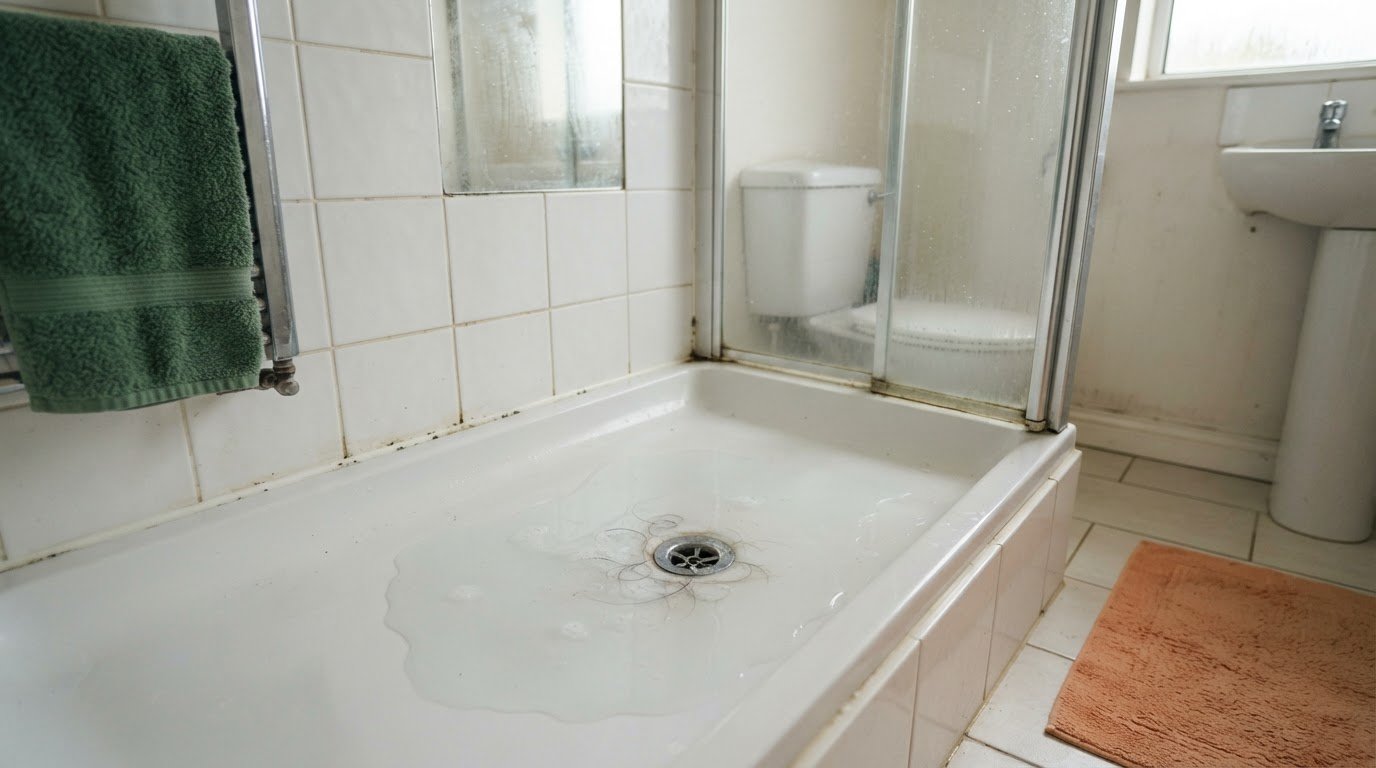
Early signs include slow drainage, recurring clogs and unpleasant smells near sinks, floor gullies or the grease trap. A serious problem may cause wastewater to back up through a drain or affect several fixtures. Treat persistent smells and any wastewater backup as signs that the drainage needs prompt attention.
Grease traps capture fats, oils and food particles before they travel further into the pipework. Staff should regularly inspect trap levels and gully grates, following the equipment’s maintenance schedule. Cleaning the trap removes collected waste before it can escape into pipes, cool and harden. Clear disposal habits matter too: keep cooking oil and food scraps out of sinks.
Boiling water isn’t a substitute for grease management. It won’t remove accumulated deposits throughout a commercial drain, and it isn’t recommended for a blocked drain. Caustic chemical cleaners are also unreliable for commercial blockages and may damage pipework or create safety risks. Neither approach replaces maintained grease traps, suitable waste disposal and planned cleaning.
Professional cleaning can use high-pressure water jetting to loosen and remove grease, scale and debris across a pipe’s full diameter. This clears more than a narrow path through the blockage. Grease trap cleaning removes collected fats and solids, while a CCTV survey can help investigate recurring problems and identify pipe damage or restrictions.
For food businesses discharging fat, oil or grease into a public sewer, a FOG licence is required under Section 16 of Ireland’s Local Government (Water Pollution) Act 1977, according to the Irish Statute Book. Proper trap servicing supports grease control, but it doesn’t replace the required licence.
2. How often do commercial drains need cleaning?
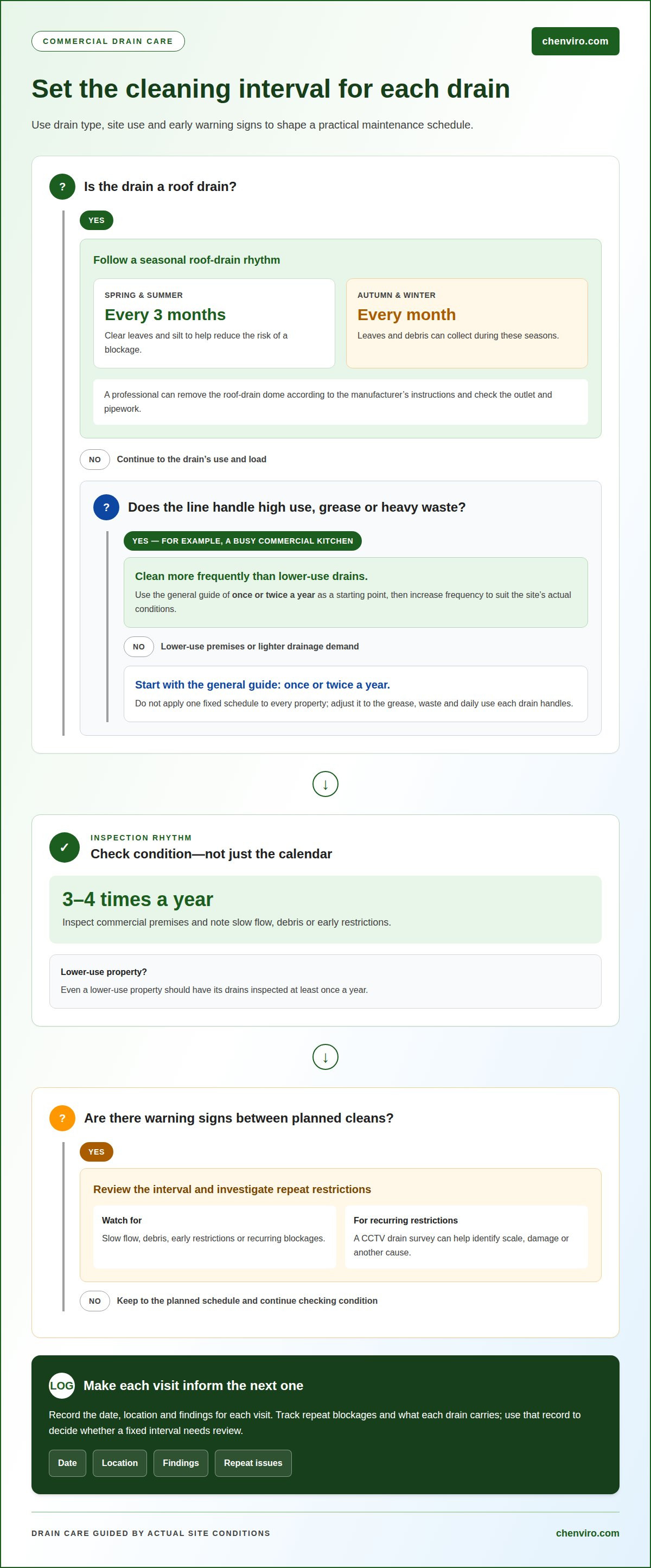
How to keep commercial drains clear depends on how much grease, waste and daily use each line handles. As a general guide, clean commercial drains once or twice a year, with more frequent cleaning at high-use premises. A busy commercial kitchen needs closer attention than an office with lighter plumbing demand. Treat this as a starting point, then adjust the plan to actual site conditions.
Inspect commercial premises three or four times a year, noting slow flow, debris or early restrictions. Even a lower-use property should have its drains inspected at least once a year. To decide how to keep commercial drains clear over time, track repeat blockages and what each drain carries. These signs may indicate that a fixed schedule needs review.
Roof drains need seasonal care. Clean them every three months in spring and summer, then every month in autumn and winter, when leaves and debris can collect. A professional can remove the roof drain dome according to the manufacturer’s instructions and check the outlet and pipework. Clearing leaves and silt helps reduce the risk of a blockage.
Inside the premises, floor gullies can collect dirt, soap scum, skin flakes and hair. Limescale can also narrow the passage and restrict flow. Handle and dispose of cleaning chemicals correctly: unsuitable products may create safety risks or harm pipework. A professional can clean and sanitise gullies as part of a planned maintenance visit.
Record each visit’s date, location and findings. If a kitchen gully slows between scheduled cleans, review its interval rather than applying the same plan across all commercial properties. For recurring restrictions, a CCTV drain survey can help identify scale, damage or another cause requiring attention.
3. Foreign objects and improper waste disposal
Food scraps, cooking oil and unsuitable objects are common causes of commercial drain blockages. In a commercial kitchen, rinsing food residue from plates or forcing waste through a sink can send debris into pipework. A screen over drain openings catches larger scraps before they enter the system. Keep fats and oils out of sinks, and use the premises’ designated waste arrangements instead.
Staff policies turn these controls into everyday habits. Train kitchen teams to scrape food into waste containers before washing dishes, and explain which items must never be flushed or poured into drains. Only toilet paper and human waste should go into toilets. Clear instructions at sinks and staff areas make disposal expectations easier to follow during busy shifts.
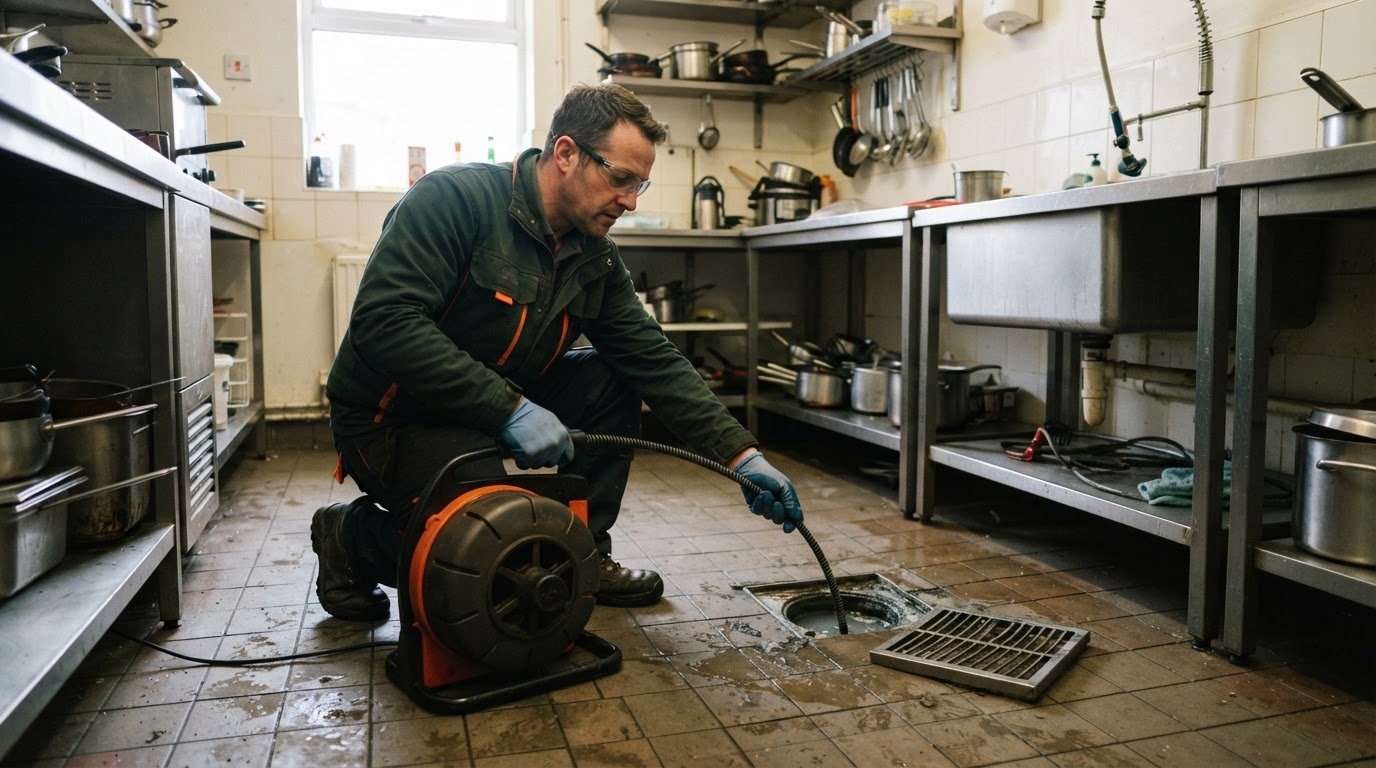
Professional kitchen cleaning also helps reduce the waste reaching drains. Scraping food from work surfaces and collecting scraps before washing down equipment limits debris around floor gullies. A commercial drain specialist can remove an obstruction mechanically, then clear remaining grease, silt or scale with high-pressure jetting. Take collected grease-trap waste to a licensed facility.
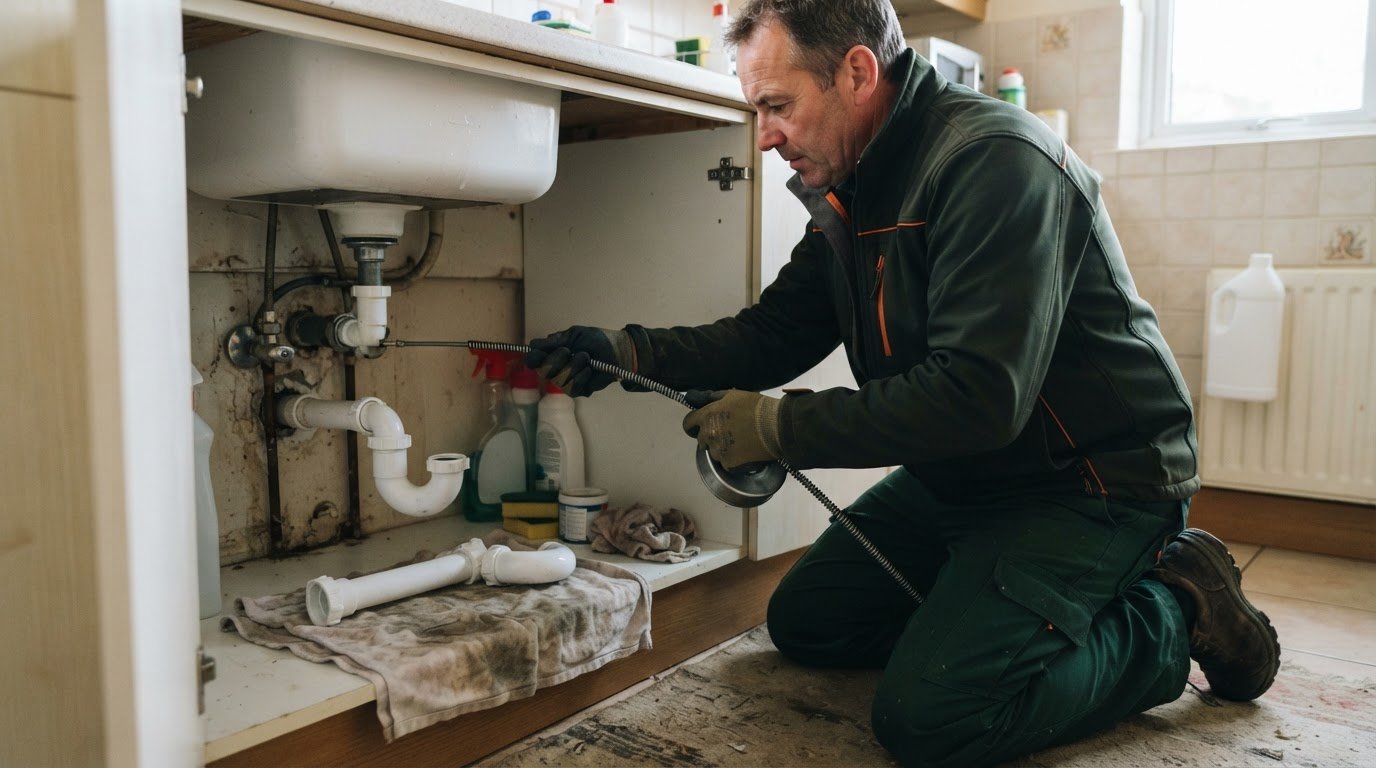
Which method suits the problem? Rodding can dislodge a local obstruction, while jetting clears deposits across more of the pipe’s diameter. A CCTV inspection helps identify causes such as roots, cracks, partial collapse or scale, especially when blockages recur. The findings help determine whether cleaning, monitoring or repair is appropriate.
Include disposal controls in drain maintenance records. Note recurring debris, the affected sink or gully, and any blockage that returns after cleaning. These records help identify whether a particular work area or disposal habit needs attention. Food businesses should keep cooking oil, food scraps and other waste products out of drains, with clear arrangements for staff to separate and remove waste during kitchen cleaning.
4. Maintenance logs and scheduled preventative plans
A maintenance log turns separate drain visits into a useful record. Note the date, location, condition and work completed, then record whether the same blocked drain or toilet causes trouble again. Monthly checks can note standing water, slow flow and debris in accessible manholes. Only lift covers where it’s safe. An annual professional plumbing inspection can help identify cracks, roots, limescale or hidden restrictions.
Shape the plan around the drainage system’s demands. A commercial kitchen should track grease traps, floor gullies and recurring grease build-up. An office may focus on toilets, slow sinks and debris in shared areas. Premises with yard gullies should record leaves, silt and flooding after heavy rain. Different patterns point to different causes, so one schedule won’t suit every site.
Include soakaways in the maintenance plan where they manage surface water. A professional inspection can look for restricted water flow, accumulated silt or pooling nearby. Record findings and any follow-up work, especially after heavy rain or where flooding has happened before. These observations help identify whether the soakaway or another part of the drainage system needs attention.
Staff training supports the schedule between inspections. Explain what must stay out of sinks and toilets, how to report slow drainage, and who records a new smell or standing water. For grease traps, keep servicing dates and observations together. A useful record shows what was checked, when it was checked and what staff found, making repeat problems easier to trace.
Review those records periodically. Repeated grease build-up or recurring blockages may call for specialist cleaning or further inspection. A planned visit can also help distinguish routine debris from damage that needs repair. To plan professional attention for a recurring drainage issue, arrange a drainage assessment.
CH Enviro
CH Enviro helps commercial premises address drainage problems that disrupt routine maintenance. If a blockage returns despite planned cleaning, a CCTV Survey can help identify root intrusion, cracks or scale restricting flow. Where the drain needs clearing, CH Enviro’s Drain Cleaning and Unblocking service can help restore flow. No-Dig Technology Repairs address damaged drains without excavation.
The right next step depends on what the inspection finds and where the problem lies. For premises with septic systems, CH Enviro provides Septic Tank Cleaning to support upkeep of that part of the drainage system. Contact CH Enviro to discuss the drainage issue affecting your premises.
Make drain care part of your site routine
A practical approach to how to keep commercial drains clear is to make responsibility part of normal site management. Assign someone to oversee the maintenance plan, share relevant updates with facilities and kitchen teams, and review it whenever the way a space is used changes. This keeps drain care connected to daily operations rather than treating it as a separate task.
Use changes at the premises as a prompt to revisit the plan. Changes in kitchen activity, staffing or building use can alter what enters the drainage system. Clear ownership helps ensure new risks are noticed and the right follow-up is arranged before a recurring issue disrupts work.
If you want professional support with the next step, speak with CH Enviro about drain care. A clear plan gives your team a practical way to look after the premises and keep its drainage needs in view.
Frequently Asked Questions
How often do commercial drains need cleaning?
As a general guide, arrange commercial drain cleaning once or twice a year, with shorter intervals for high-use sites. A kitchen serving food throughout the day may need more attention than an office with light drainage use. Review the schedule if the premises changes use or a blockage returns soon after cleaning, as this pattern may call for further investigation.
What are the early signs of grease build-up at a kitchen drain?
Slow drainage, recurring clogs and unpleasant smells near a sink or floor gully can point to grease build-up. Note which fixture is affected and whether the problem returns after cleaning. Wastewater backing up is a more serious warning: stop using the affected drain and arrange professional attention, particularly if several fixtures are affected at once.
How often should commercial drains be cleaned and inspected?
Cleaning is generally recommended once or twice a year, while inspections can be arranged three or four times a year. High-use premises may need more frequent cleaning, especially where grease or heavy waste enters the drainage system. Keep cleaning and inspection dates separate in the maintenance record so recurring restrictions aren’t mistaken for a routine cleaning requirement.
What is the best preventative maintenance routine for commercial drains?
Combine scheduled professional cleaning with regular checks, staff guidance and a written record of findings. Monthly checks can record slow flow, standing water or debris where manhole covers can be accessed safely. Train staff to report changes promptly and keep unsuitable waste out of sinks and toilets. An annual professional plumbing inspection provides a broader assessment of the drainage system.
Which drain strainers, grease traps and interceptors help prevent blockages?
Fit suitable screens or guards over drain openings to catch larger debris before it enters pipework. Food premises can use maintained grease traps to capture fats and oils. BS EN 1825 Parts 1 and 2 is the standard identified for grease separators; the appropriate solution depends on the premises and drainage design. Keep trap checks and servicing in the site maintenance record.
How should businesses dispose of fats, oils, grease and food waste?
Keep food scraps out of sinks and place them in the rubbish. Collect fats and oils in a disposable jar for normal rubbish rather than pouring them into a drain. Food businesses discharging fat, oil or grease to a public sewer need a FOG licence under Section 16 of Ireland’s Local Government (Water Pollution) Act 1977, according to the Irish Statute Book. Collected trap waste should go to a licensed facility.
Comments