
How to Care for Your Drain After Unblocking
A drain that runs freely after unblocking may still need attention. Good post-unblocking drain care means watching how it drains, keeping hair, food and grease out of the pipe, and responding if the same blockage returns. A baking soda and vinegar treatment is left to fizz for 15 to 20 minutes before the drain is flushed with hot water.
It’s understandable to want reassurance that the problem is fully resolved. Watch for slow drainage, changes in water colour or consistency, unpleasant smells, or repeat blockages. These signs can indicate that routine care is not enough.
This guide covers practical drain care, how to interpret changes in drainage, and the role of a baking soda and vinegar treatment in routine maintenance. It also explains when a recurring blockage may call for professional attention rather than another temporary fix.
Table of Contents
Drain maintenance
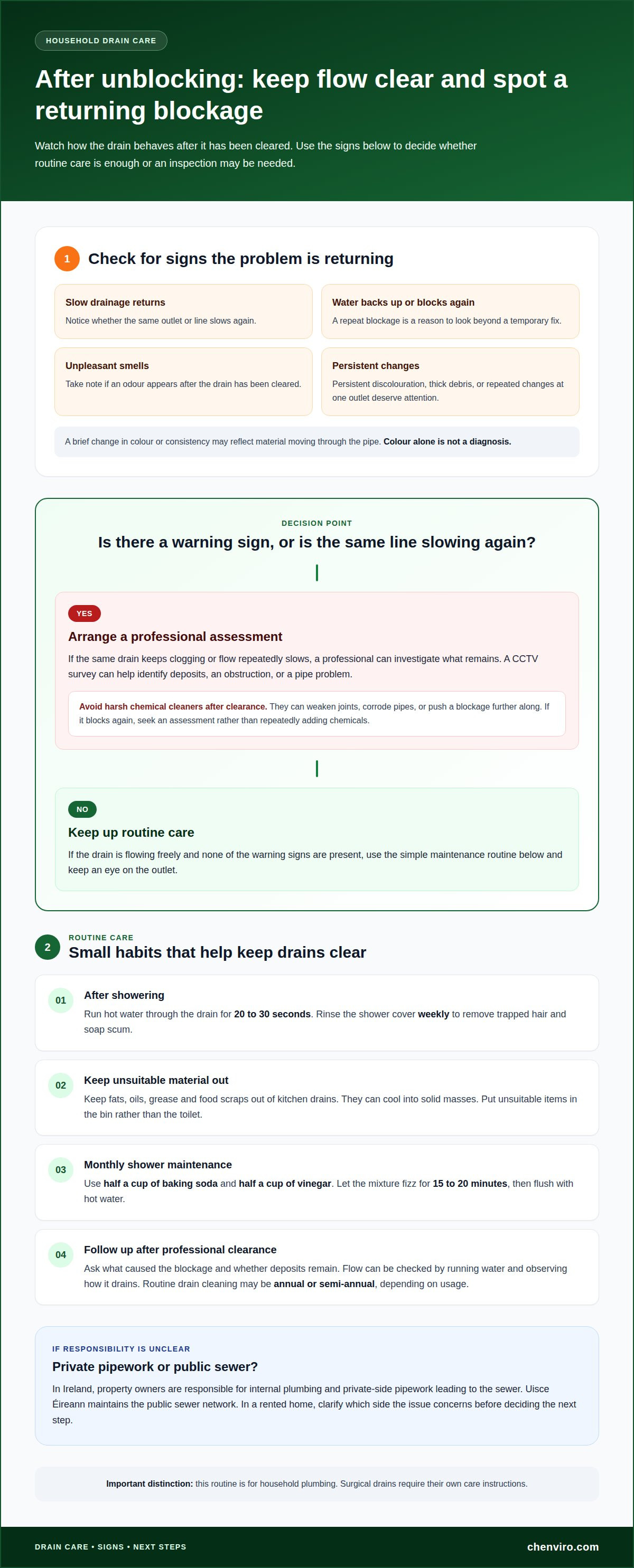
A simple routine helps keep a cleared household drain working. Effective post-unblocking drain care also means noticing when the same line slows again and needs professional attention.
Set a regular maintenance schedule
After showering, run hot water through the drain for 20 to 30 seconds. Rinse the shower cover weekly to remove trapped hair and soap scum.
Keep fats, oils, grease and food scraps out of kitchen drains. These materials can cool into solid masses, while unsuitable items belong in the bin rather than the toilet.
For monthly shower maintenance, use half a cup of baking soda and half a cup of vinegar. Let the mixture fizz, then rinse with hot water. Routine drain cleaning may be annual or semi-annual, depending on usage.
For a surgical drain, follow its care instructions instead of household plumbing advice. Strip the tubing 2 or 3 times before emptying. Empty the bulb 2-3 times per day to maintain suction; as output decreases, it can be emptied once a day.
Follow post-clean maintenance advice
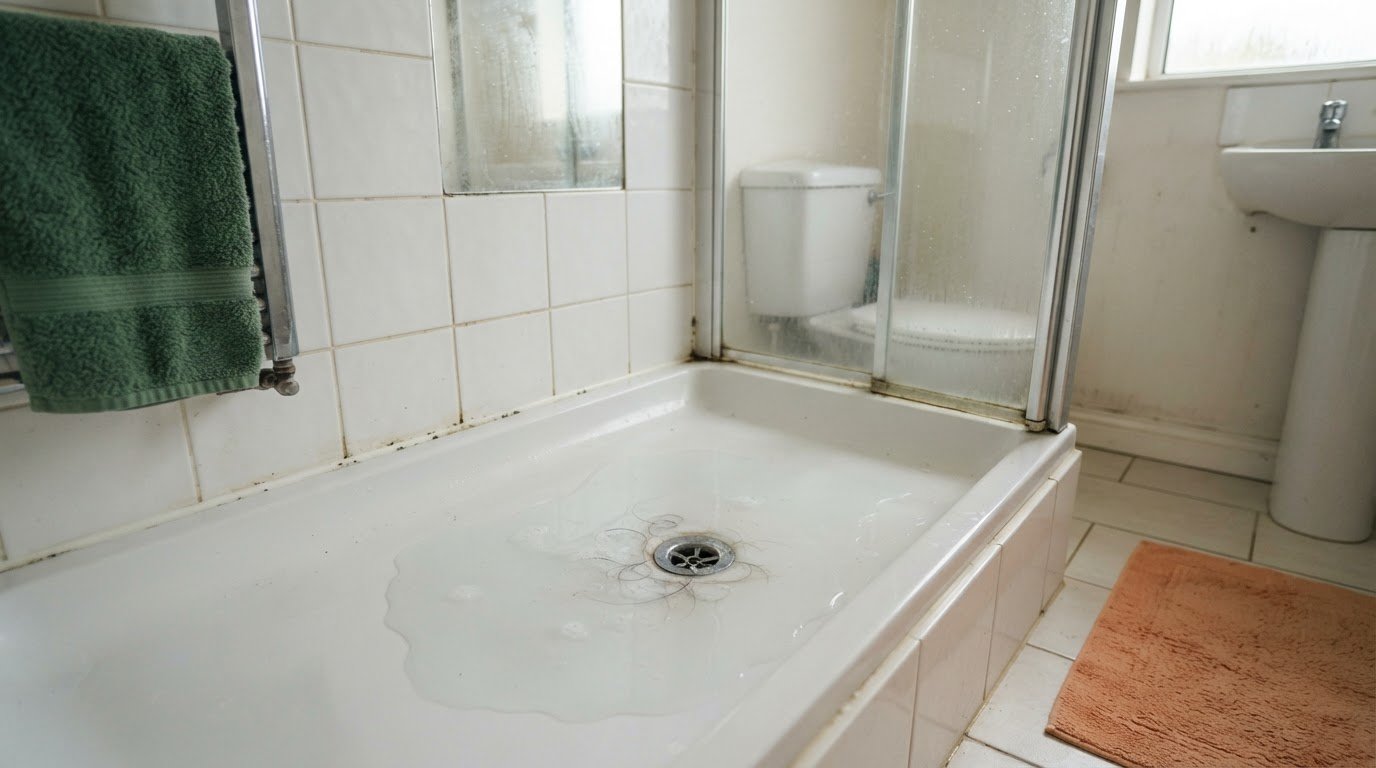
Ask the professional who cleared the drain what caused the blockage and whether deposits remain. They can check flow by running water and observing how it drains. If the same line repeatedly slows, a CCTV survey can help investigate further.
Avoid harsh chemical cleaners after clearance. They can weaken joints, corrode pipes or push a blockage further along. If the drain blocks again, arrange an assessment rather than repeatedly adding chemicals.
In Ireland, property owners are responsible for internal plumbing and private-side pipework leading to the sewer. Uisce Éireann maintains the public sewer network. For a rented home, clarify whether the issue concerns private pipework or the public sewer before deciding the next step.
Home insurance cover depends on the policy and the circumstances of the blockage. Check the policy wording for the relevant cover and exclusions.
Make post-unblocking drain care part of your household routine. If drainage slows again, note which outlet is affected.
How do I care for my drain?
First, distinguish household plumbing from a surgical drain. Their care differs: a former medical drain site needs wound care, while a blocked household pipe may need debris removal or repair.
For a surgical drain, follow the care instructions for its removal and former site. Removal timing depends on output and the operation, not simply on how the site looks.
Care for the former drain site
Keep the former surgical drain site covered as directed after removal. Remove the dressing two days after drain removal, and avoid submerging the site until 4 to 6 weeks after surgery. The small opening can take several weeks to heal fully. Watch its condition, and contact your healthcare provider if drainage increases for two days straight.
Use the output threshold as one guide to surgical drain removal. A surgical drain is generally kept in place until output is less than 25 to 30 millilitres in a 24-hour period. It may remain for 5 to 21 days, depending on the surgery, and may stay in place for up to five weeks depending on drainage amount and other factors.
How professionals remove visible hair and debris from a drain
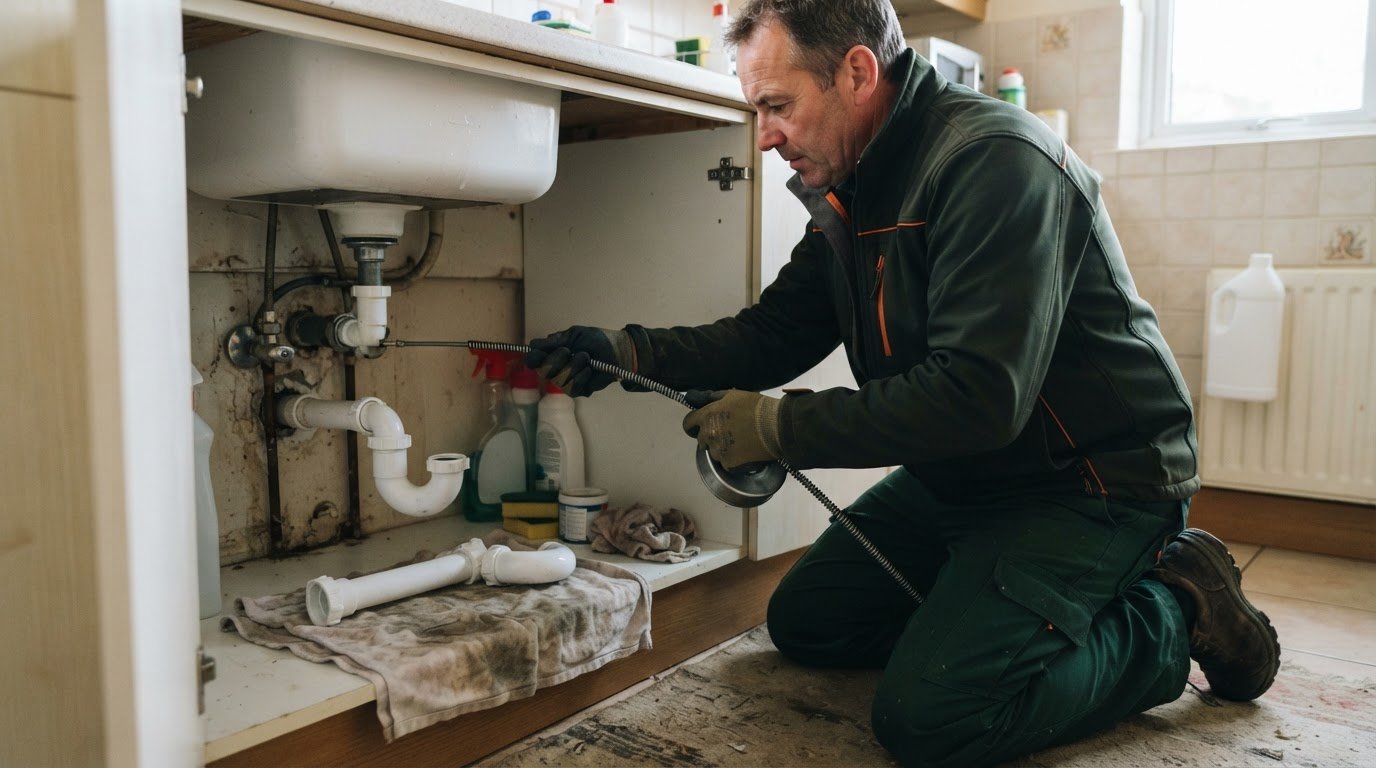
Have visible hair and debris removed without forcing them further into the pipe. A professional can assess whether the material is near the opening or restricted flow points to deposits deeper in the line. If the same drain blocks again, a CCTV survey can help identify an obstruction or a problem with the pipe.
If tree roots are found, have them removed before the pipe is cleaned. Roots can enter through defects; sealing or repairing the pipe after removal helps prevent re-entry.
After flooding, have standing water and debris removed from affected areas, then assess whether drains are flowing freely. Floodwater can carry silt and other material towards drain openings, so visible debris should not be pushed into the pipe.
Keep the distinction clear: medical drain output and household drain flow need different checks. For a recurring blocked pipe, professional inspection can identify whether further cleaning or repair is needed.
Expected changes in drainage colour and consistency
Household wastewater and fluid from a medical drain are different. Monitor changes in the relevant system, and don’t treat colour alone as a diagnosis.
Observe household drainage after clearance. A brief change in colour or consistency may reflect material moving through the pipe, but persistent discolouration, thick debris or slow flow deserves attention. Compare what comes from the toilet, shower or sink, and note whether the same outlet changes repeatedly.
Watch for signs that a blockage is recurring or a pipe may be damaged. Slow drainage that returns, wastewater backing up, or repeated changes at the same outlet are reasons to arrange an inspection. A CCTV survey can help identify deposits or structural problems without relying on colour alone.
For a surgical drain, record changes in output colour, thickness and amount against its usual pattern. Don’t infer the cause from appearance alone. Contact your healthcare provider if drainage increases for two days straight, or if the person develops a fever of 38 degrees Celsius or more.
Change the dressing around a surgical drain according to the care instructions provided for that site. The dressing-change supplies include 4x4 split gauze. Keep the dressing’s condition in view, and follow the stated instructions for replacing it rather than applying household drain advice.
For an open surgical drain, use the dressing method specified by the clinical team. Place the listed 4x4 split gauze as instructed, and note any change in the fluid reaching it. If drainage increases for two days straight, contact the healthcare provider.
Keep a brief record of changes: note the outlet or drain, appearance, consistency and whether flow changes after use. For example, repeated slow flow from the shower differs from a one-off change after the toilet is flushed. Those details help distinguish recurring blocked drains from changes in medical drainage.
Baking soda and vinegar drain treatment
Use this treatment only for routine care of a shower drain that is already flowing. It is not an emergency response or a substitute for investigating a blockage that returns after professional clearance.
Choose the right moment. A monthly baking soda and vinegar flush is intended for routine shower drain maintenance, not for standing water or a drain that has stopped flowing. If water backs up or the same line repeatedly becomes blocked, arrange an assessment instead of relying on another mixture.
Use the stated amounts for the monthly treatment: pour half a cup of baking soda into the shower drain, then add half a cup of vinegar. Keep the quantities consistent rather than adding extra ingredients. The fizzing is part of the process, but it does not prove that the pipe is clear.
Leave the mixture to fizz for 15 to 20 minutes, then rinse it through with hot water. Don’t treat a quick rinse as evidence that deeper deposits have been removed. After flushing, observe whether water continues flowing normally and whether drainage slows again.
Keep this method separate from chemical drain cleaners. Don’t combine products or add a chemical cleaner to the mixture. A drain that remains slow after treatment needs assessment, particularly if water is backing up or wastewater appears at another outlet.
Know when to stop. A recurring blockage, persistent poor flow or a suspected pipe defect calls for professional investigation, not repeated monthly treatments. A CCTV survey can help identify deposits or structural damage when the same drain keeps causing trouble.
For an ongoing blockage, arrange professional drain assessment rather than waiting 24 hours or repeating a home treatment. The right next step depends on whether the problem is residual debris, a deeper obstruction or damage affecting the pipe.
CH Enviro: Drain Unblocking Service
CH Enviro’s Drain Cleaning and Unblocking service can help when a blockage returns, water keeps draining slowly, or the cause remains unclear after routine care. If the same line repeatedly clogs, a CCTV Survey can inspect the pipe and help identify deposits or damage. Where repair is needed, CH Enviro also offers No-Dig Technology Repairs. For properties with septic systems, CH Enviro provides septic tank cleaning.
Choose the service that matches the problem: recurring pipe blockages may call for investigation, while a septic tank issue needs septic tank cleaning. Clear details about which outlet is affected and how the symptoms have changed can help explain the issue. For assistance with a blocked drain, contact CH Enviro.
Take the next step with confidence
Use the pattern of the problem to decide what to do next. One slow outlet differs from several affected fixtures, and a blockage that returns needs more than routine maintenance. Note which drains are affected, what has changed since the clearance, and whether the problem is worsening. These details help you explain the issue when arranging professional help.
Good post-unblocking drain care does not mean treating every change as an emergency. It means recognising when normal use has not restored reliable flow and avoiding repeated attempts that may leave the underlying issue unresolved. A professional can assess whether the drain needs cleaning, inspection or repair based on the symptoms.
CH Enviro provides a Drain Unblocking Service, CCTV Drain Survey and No-Dig Drain Repair to address blockages and investigate drain problems. If you’re ready to discuss the issue, contact CH Enviro for drain care help. Take the next step with clear information and a practical plan.
Frequently Asked Questions
What does a professional do immediately after unblocking a drain?
A professional checks the cleared section and considers whether the original cause may remain. For example, removing a blockage can restore flow while deposits elsewhere in the line still need attention. The professional can explain what the work revealed and whether further cleaning, a CCTV inspection or repair is the right next step. This helps distinguish a cleared obstruction from an underlying problem that may recur.
How can a professional tell if a drain is still blocked after clearance?
A professional looks for signs of continuing restriction, such as water rising in the fixture, gurgling, or drainage slowing again after use. Several affected outlets can point to an issue beyond one sink or shower. If the cause isn’t clear from the symptoms, a CCTV survey can show deposits or damage inside the pipe. This evidence helps guide the next step instead of repeating a clearance without investigating.
How often should household drains be cleaned or maintained?
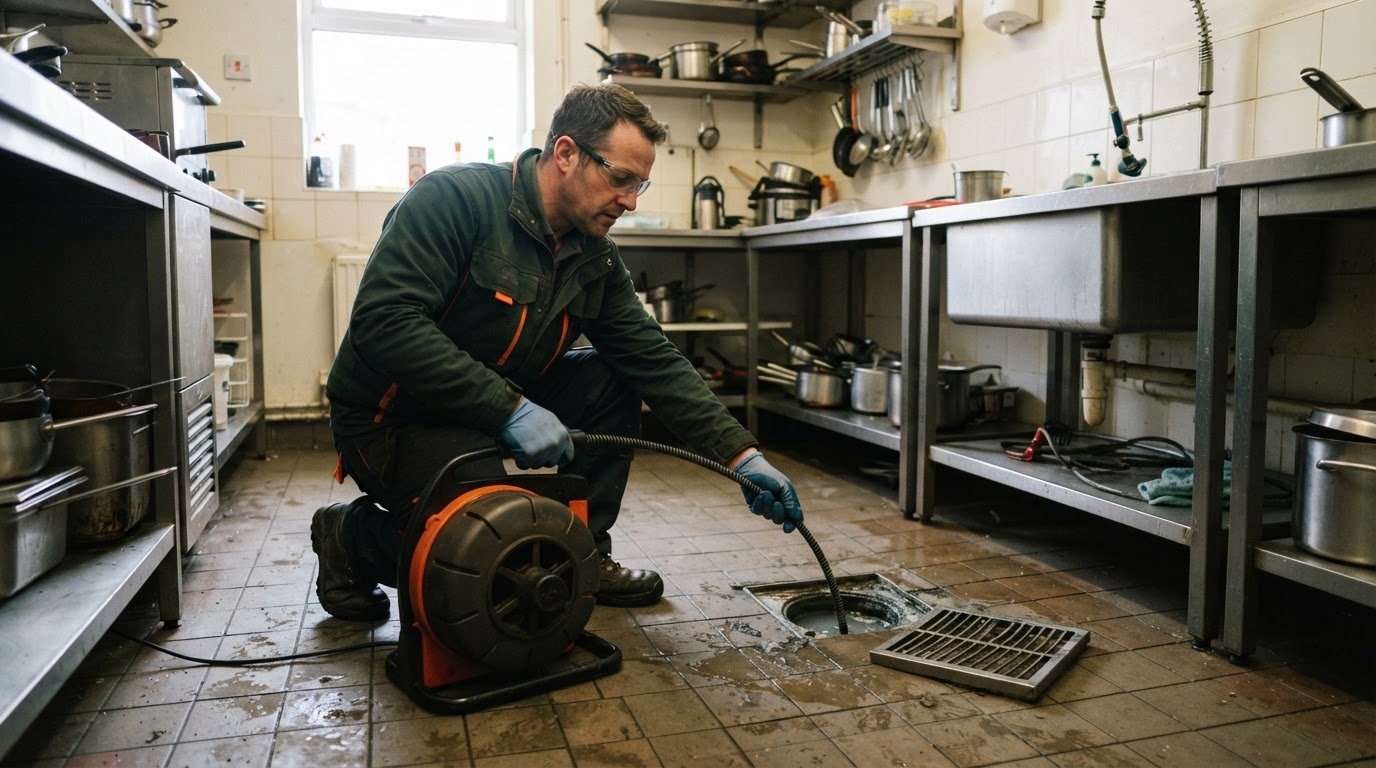
Plan routine drain cleaning annually or semi-annually, depending on how heavily the drains are used. A household with frequent cooking and shower use may need closer attention than one with lighter use. Keep routine maintenance separate from immediate action: a drain that repeatedly slows or blocks needs assessment rather than waiting for its scheduled clean. Businesses should arrange regular cleaning before a blockage causes disruption.
Comments