
FOG compliance for Wicklow food businesses and grease trap care
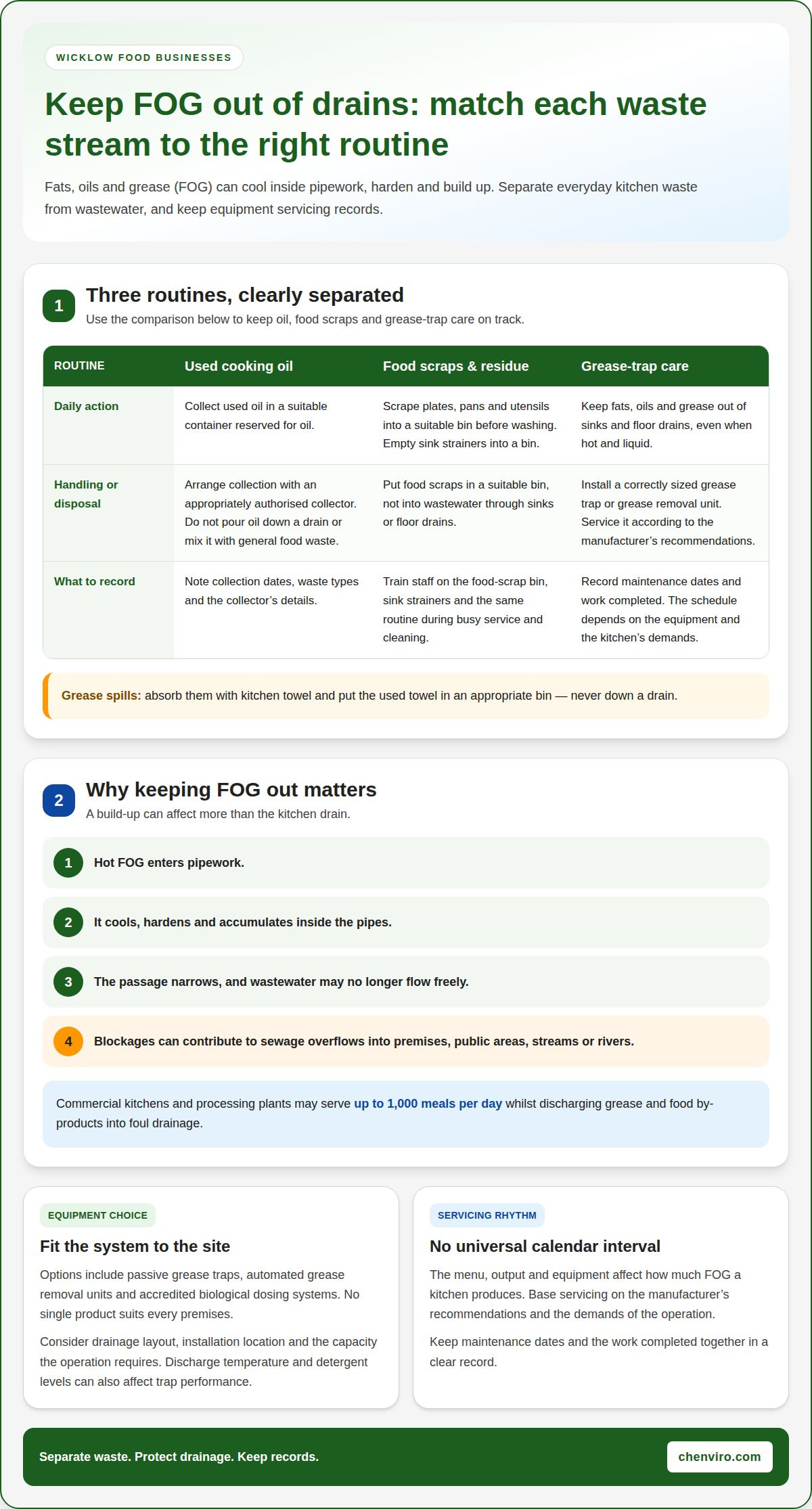
For FOG compliance for food businesses in Wicklow, install a correctly sized grease trap or grease removal unit and service it according to the manufacturer’s recommendations. Keep maintenance records. The appropriate schedule depends on the equipment and the demands of the kitchen.
Grease-trap care can seem like routine maintenance, but fats, oils and grease can cool inside pipes, build up and cause blockages, affecting drains and wastewater systems. Good hygiene and careful waste handling help reduce this risk.
This guide explains what determines servicing frequency, how FOG travels from a kitchen into drainage, and how to manage used cooking oil and food waste. It also covers the Irish trade-effluent licensing requirement and practical hygiene measures for food businesses. You’ll learn how grease-trap cleaning and maintenance can help, and what to consider if a blockage or ongoing drainage problem needs attention.
Table of Contents
How often should grease traps be serviced and cleaned?
There is no single cleaning interval for every Wicklow kitchen. Install a correctly sized grease trap or grease removal unit and service it according to the manufacturer’s recommendations. Record maintenance dates and work completed. The menu, output and equipment affect how much FOG the kitchen produces, so tailor the servicing routine to the operation. These are practical starting points for FOG compliance for food businesses in Wicklow.
Restaurants, cafés, takeaways, hotels, pubs serving cooked food and food-production kitchens can all generate FOG. Convenience stores, supermarkets and garage forecourt shops with delicatessen counters may also need to manage grease. Assess the drainage layout, where the unit can be installed and the capacity the operation requires. Poor sizing or unsuitable placement can undermine performance.
Available FOG-management options include passive grease traps, automated grease removal units and accredited biological dosing systems. One product may not suit every premises. Discharge temperature and detergent levels can also affect a trap’s performance. Reviewing site conditions helps guide the choice and design of a system for a commercial kitchen or food-processing plant.
Uisce Éireann operates and maintains public sewers and clears blockages in them caused by FOG. Its role in public sewers does not identify a specific enforcement department for Wicklow businesses. If drainage problems recur at your premises, a survey of the drainage layout can help inform FOG-system design. Arrange used cooking oil collection with an appropriately authorised collector.
Fines reported for poor grease management in the UK are not Irish penalty figures. For Wicklow premises, focus on correctly sized equipment, servicing based on the manufacturer’s recommendations and clear maintenance records. Cleaning frequency depends on the equipment guidance and the kitchen’s grease load, not a universal calendar interval. This provides a practical basis for FOG compliance for food businesses in Wicklow.
How fats, oils and grease affect drains and wastewater systems
Hot FOG can cool inside pipework, harden and accumulate, narrowing the passage until wastewater cannot flow freely. The effects can extend beyond the kitchen drain.
Commercial Kitchen Drainage and Separators
Commercial kitchens and processing plants may serve up to 1,000 meals per day whilst discharging grease and food by-products into foul drainage. As deposits build inside pipes, they can contribute to blockages and sewage overflows into premises, public areas, streams or rivers. These overflows create environmental and public health hazards.
UK rules are not Wicklow rules. In the UK, Building Regulations 2000 Part H (2002 edition) require drainage serving kitchens in commercial hot food premises to be fitted with a grease separator complying with specified standards. This requirement should not be presented as an Irish standard. In Wicklow, choose and maintain FOG controls suited to the site and its wastewater arrangements.
Practices to Keep FOG Out of Drains
Keep fats, oils and grease out of sinks and floor drains, even when hot and liquid. Scrape plates, pans and utensils into a suitable bin before washing, and use kitchen towel to absorb grease spills. Put the used towel in an appropriate bin, never down a drain.
Small kitchen routines matter. Fit a strainer in sink plugholes and empty collected food scraps into a suitable bin. Train staff to follow the same steps during busy service and cleaning, so grease and food residue do not enter wastewater through different sinks.
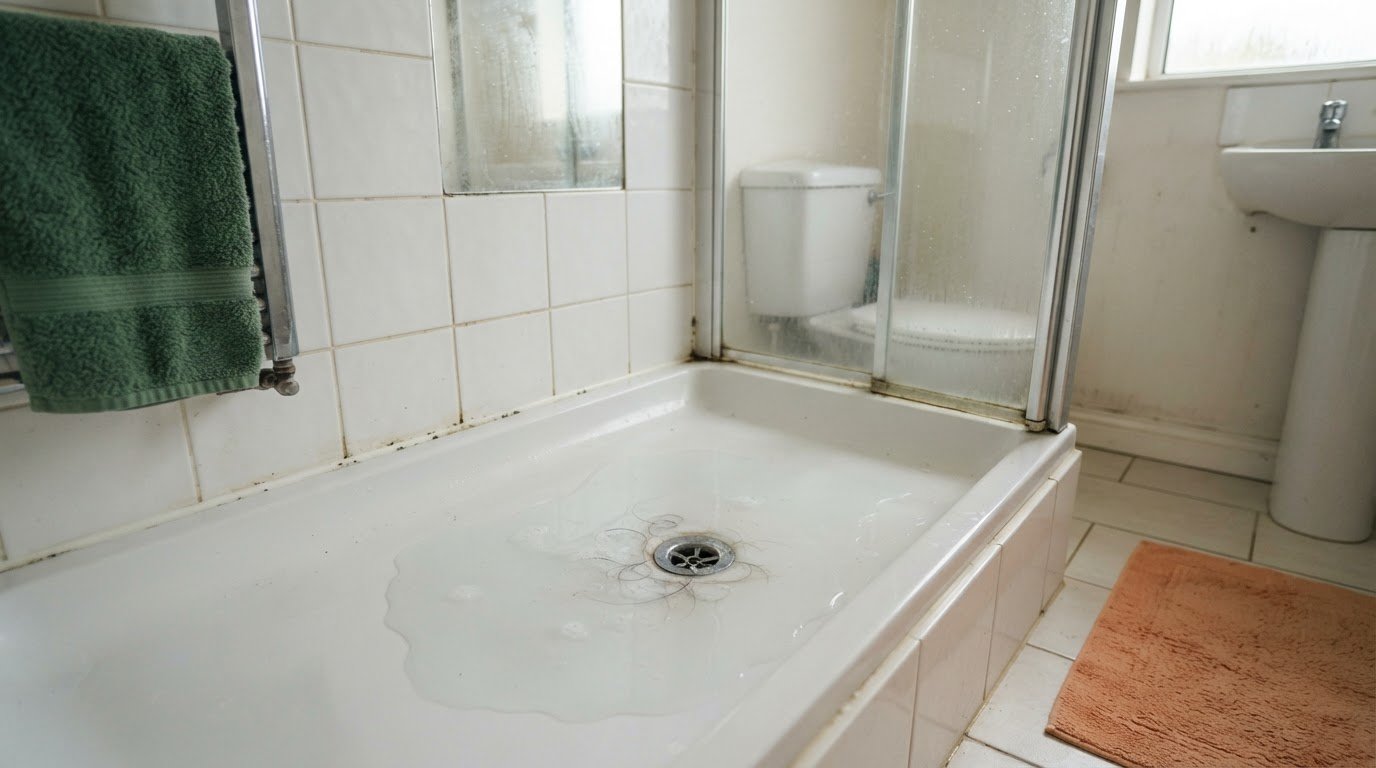
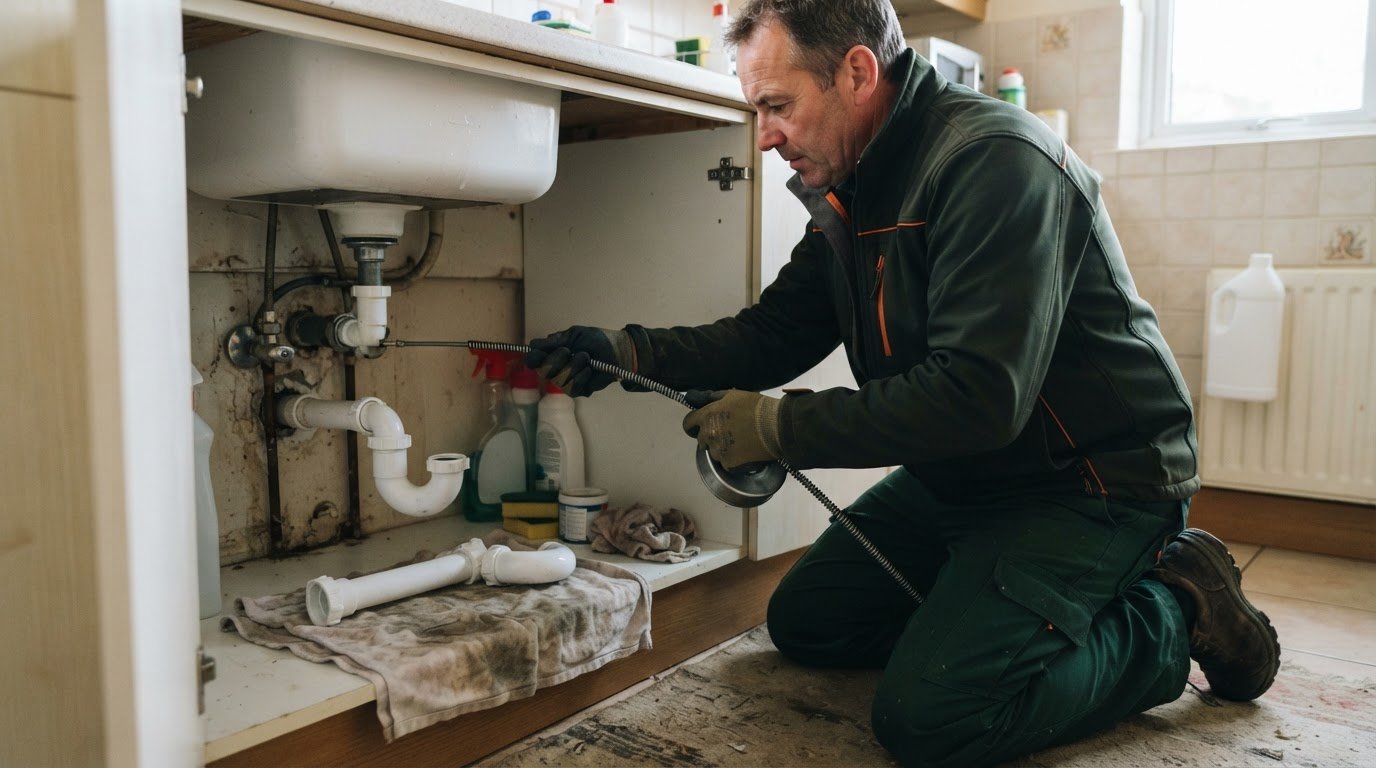
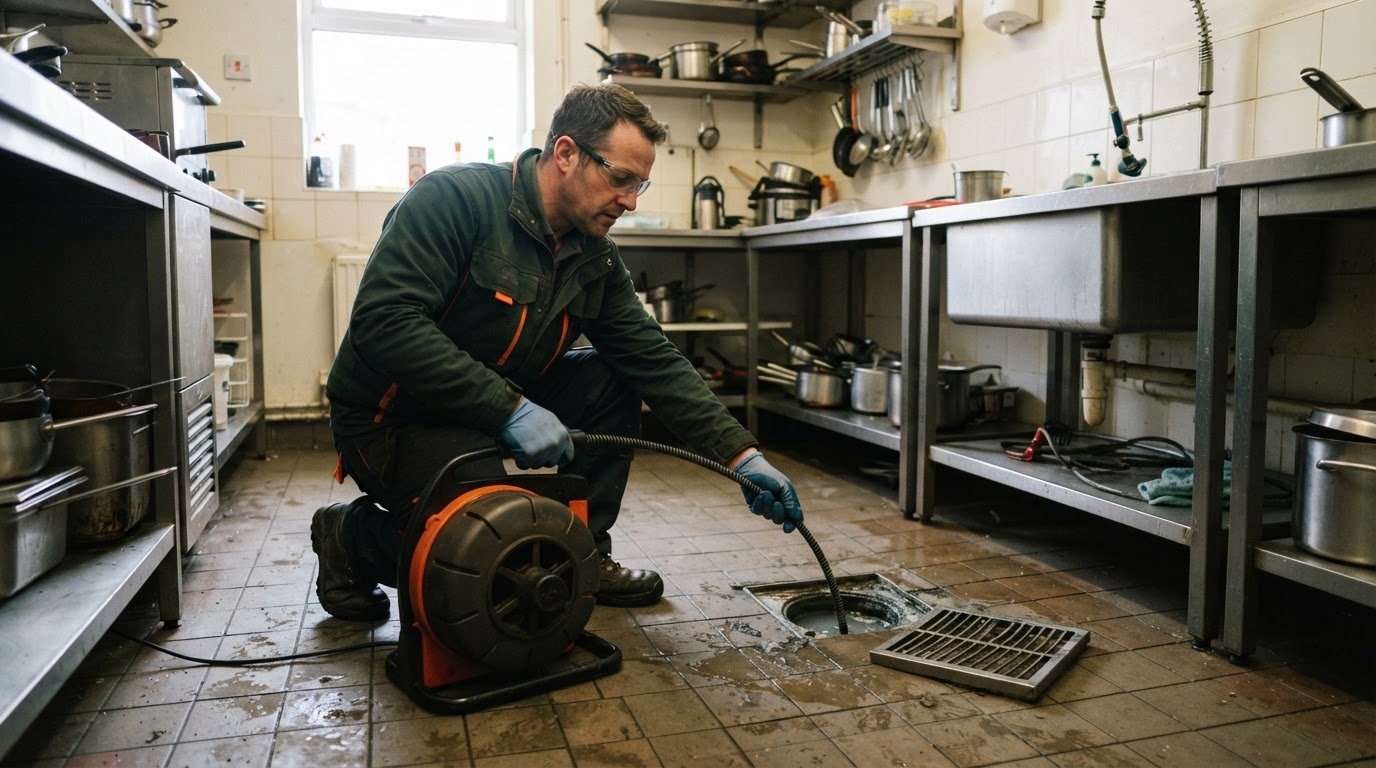
If a drain is already slow or blocked, avoid treating repeated symptoms as normal kitchen upkeep. A drain unblocking service can address an obstruction; good kitchen practices help reduce further FOG entering the system.
Waste disposal duties for fats, oils and grease
Butter, lard, vegetable oils, animal fats, meat, sauces and dairy can all produce FOG during food preparation and washing. Clear disposal routines help keep these materials out of drains and reduce risks to the premises and the environment.
FOG Disposal and Environmental Protection
FOG entering drains can build up and contribute to blockages. Raw sewage may then overflow into business premises, public areas, streams or rivers, creating environmental and public health hazards. Preventing grease from entering wastewater protects more than kitchen pipework. Staff should collect food scraps and grease separately, rather than washing them into sinks or floor drains.
Disposal of Used Cooking Oil
Collect used cooking oil in a suitable container and arrange collection with an appropriately authorised collector. Reserve the container for oil, so staff do not mix it with general food waste or pour it down a drain. A consistent collection routine also helps prevent spills during storage and handling. Make the disposal steps clear to staff who change fryer oil or prepare food with cooking oils.
FOG Disposal Records
Keep a simple record of oil collections and grease-trap maintenance. Note collection dates, waste types and the collector’s details, alongside service dates and work completed. These records give the business a practical overview of waste collection and equipment maintenance. Keep the entries together instead of relying on individual staff members to remember collection or cleaning details.
Staff training makes these steps part of daily work. Show kitchen staff where used oil is stored, which bin is for food scraps and how to deal with grease spills. For example, absorb a spill with kitchen towel, then put it in an appropriate bin. Empty sink strainers into a suitable bin as well. Clear routines for food preparation and wash-up help prevent FOG from entering wastewater.
Food business hygiene and legal compliance
Good hygiene and FOG control go hand in hand: kitchen routines affect what reaches drains, while trade effluent has a specific Irish licensing requirement. Food businesses need practical procedures for sinks, equipment, staff and wastewater.
In Ireland, a trade effluent discharge to a public sewer requires a licence under Section 16 of the Local Government (Water Pollution) Act 1977, as amended, according to the Irish Statute Book. This applies to trade effluent discharged to a public sewer. A business should understand whether its discharge falls within this requirement and manage it accordingly.
Keep wash-up separate from food preparation. Clean equipment in a dedicated wash-up sink, not in the sink designated for food preparation. This separation helps staff follow distinct routines for utensils and food-contact surfaces. Train kitchen teams to scrape food residue into a suitable bin, keep grease out of sinks and report slow drainage promptly.
FOG from a premises can contribute to blockages and flooding. If a business’s discharge causes this damage, the business may be liable for associated costs. These may include specialist machinery and personnel, lost stock and cleaning the affected premises. The business or property owner is responsible for blockages in private drains connecting to a public sewer.
The Food Safety Authority of Ireland assists businesses in achieving good hygiene standards and complying with the law. Apply that focus in daily operations: keep wash-up areas clean, clarify staff responsibilities and maintain grease-management equipment. Documented procedures help teams follow consistent steps across food preparation and cleaning shifts.
The Food Safety Authority of Ireland reported that twelve closure orders were served on food businesses in Ireland in September. This figure relates to food-business closure orders, not specifically to FOG violations. Treat hygiene and drainage as distinct responsibilities that need coordinated procedures. Assign staff to maintain kitchen cleanliness, manage grease correctly, and record equipment maintenance consistently.
CH Enviro: Grease Trap Cleaning & Maintenance
CH Enviro provides Grease Trap Cleaning & Maintenance for food businesses needing routine care or concerned about grease build-up. Regular servicing supports a well-maintained FOG-management system and helps businesses keep maintenance records up to date.
Use this service when your premises needs grease-trap cleaning or ongoing maintenance. If FOG has contributed to a blocked drain, CH Enviro also provides a Drain Unblocking Service. A CCTV Drain Survey can help investigate drainage issues, while No-Dig Drain Repair addresses suitable drain damage without excavation.
When you contact CH Enviro, describe the issue affecting your kitchen or drainage system. The right service depends on whether you need trap maintenance, blockage clearance or help with a drain fault. Contact CH Enviro to discuss grease-trap cleaning and maintenance for your premises.
Make FOG control part of your kitchen routine
FOG compliance for food businesses in Wicklow is not a one-off task. Build responsibility into daily kitchen operations, so staff know who manages grease control and how to pass on concerns between shifts. Review the routine when the kitchen’s work changes, such as when equipment or food preparation practices are updated.
If a drainage issue needs attention, CH Enviro offers a Drain Unblocking Service, CCTV Drain Survey and No-Dig Drain Repair. These services address different problems, from clearing an obstruction to investigating a drain or repairing suitable damage without excavation.
Choose the next step based on what is happening at your premises. A recurring blockage, an unexplained drainage issue and damaged pipework each call for a different response. Clear information about the symptoms helps identify the appropriate service.
Contact CH Enviro about FOG compliance to discuss the issue affecting your Wicklow food business. With clear procedures and the right support, you can keep your kitchen’s drainage responsibilities in view and move forward with confidence.
Frequently Asked Questions
What does FOG mean for food businesses in Wicklow?
FOG means fats, oils and grease generated during food preparation, cooking and cleaning. Examples include cooking oil, butter, meat fat and dairy residues. For a Wicklow food business, the practical priority is keeping these materials out of drains, where they can cool and build up. Consider every source, from fryer oil to greasy pans, when setting kitchen waste procedures.
Which Wicklow food businesses must comply with fats, oils and grease (FOG) requirements?
Businesses that prepare, cook or serve food can produce FOG and should manage it responsibly. This includes restaurants, cafés, takeaways, hotels, pubs serving cooked food and food-production kitchens. Even a small delicatessen counter can generate grease. The amount and type of FOG vary with the menu, equipment and scale of work, so procedures should reflect the operation at the premises.
What are Irish wastewater rules for FOG disposal by food businesses?
In Ireland, a trade-effluent discharge to a public sewer requires a licence under Section 16 of the Local Government (Water Pollution) Act 1977, as amended, according to the Irish Statute Book. FOG should be kept out of sinks and floor drains. Uisce Éireann operates and maintains public sewers, while blockages in private drains connecting to them are the responsibility of the business or property owner.
How often must grease traps be cleaned and maintained under Irish regulations?
No single cleaning interval applies to every grease trap. Service the equipment according to the manufacturer’s recommendations, taking account of its capacity and the kitchen’s FOG output. For example, a menu involving frequent frying may create a different grease load from one with less oil-intensive preparation. Record maintenance dates and completed work so the servicing history is easy to follow.
How should used cooking oil and food waste be stored and collected in Wicklow?
Keep used cooking oil in a suitable container and arrange collection with an appropriately authorised collector. Separate it from general food waste so staff can handle each stream correctly. Put food scraps in a suitable bin rather than washing them away. A practical kitchen setup clearly labels the oil container and food-waste bin, then shows staff where each belongs during preparation and closing duties.
What inspections, records and evidence are needed to demonstrate FOG compliance?
Keep maintenance details for grease-trapping equipment alongside records of used-oil collections. A useful file can include service dates, work completed, collection dates and the collector’s details. These entries help explain how the premises manages FOG and waste. The Food Safety Authority of Ireland assists businesses with good hygiene standards and legal compliance; keep hygiene procedures distinct from wastewater and waste-disposal records.
Comments