
Drain Snake vs Hydro Jetting: Compare Costs and Cleaning Power
A more powerful clean isn’t always the best first move. In the drain snake vs hydro jetting comparison, a snake mechanically breaks through or opens a blockage, while hydro jetting uses high-pressure water to flush debris and buildup from pipe walls. A snake can suit a localised obstruction; jetting can provide a more thorough clean, but the condition of the pipe matters.
If you’re weighing up the options, it’s reasonable to want a method that clears the clog without paying for more work than the problem needs. This guide explains how drain snake machines work, which blockages each method can tackle, and how their cleaning power and costs compare. The price depends on the case and is given after a quote request; the blockage, its location and pipe condition affect the work involved. You’ll also see when inspection should come before high-pressure cleaning, so the choice is based on the drain, not simply on which tool sounds stronger.
Table of Contents
How Well Does A Drain Snake Clean Pipes?
Drain snaking and hydro jetting clear pipes in different ways. A snake’s rotating cable breaks through or catches an obstruction, creating a path for waste to flow. Hydro jetting directs pressurised water through the pipe, dislodging debris and flushing grease and other buildup away.
Hydro jetting typically uses water pressure between 3,000 and 4,000 psi. The jets can clean pipe walls as well as tackle the blockage, while snaking may leave residue behind. That difference can matter when buildup contributes to recurring clogs. A more thorough clean may help reduce repeat interventions, but pipe condition affects which approach is suitable.
Flex-shaft machines use a rotating cable with cutting attachments to remove material from pipe walls. Their cables are usually around 50 feet to over 100 feet long, and they commonly spin at more than 2,000 rpm. This gives professionals a mechanical cleaning option for longer pipe runs, without using high-pressure water.
Choose a method based on the obstruction, the depth of cleaning needed and the pipe’s condition. Hydro jetting’s pressure can damage older or fragile pipes, so assess the pipe before using it.
For a septic system, neither method is automatically safer. The blockage’s location and the pipe’s condition matter; high-pressure water needs particular care where pipework may be fragile.
In Ireland, the cleaning method alone does not establish what qualifications or insurance apply to drain jetting. This comparison is not a statement of legal requirements.
Drain snakes and augers for minor blockages
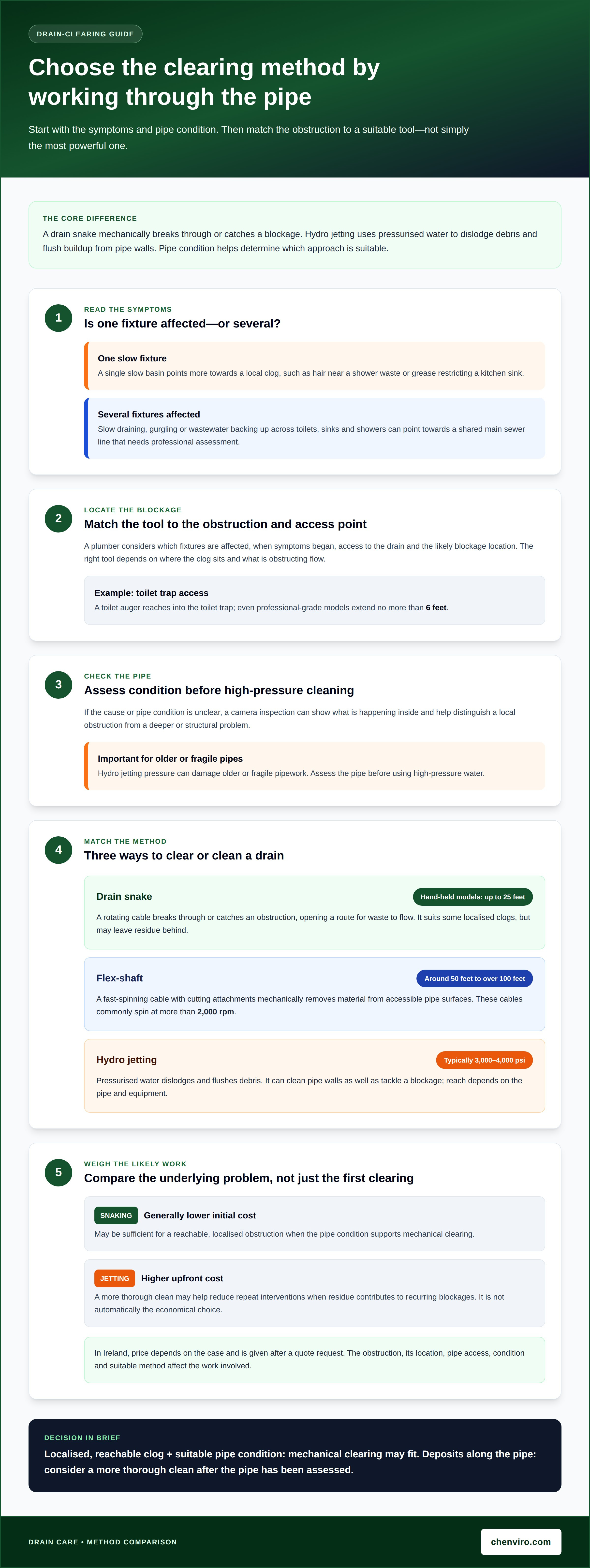
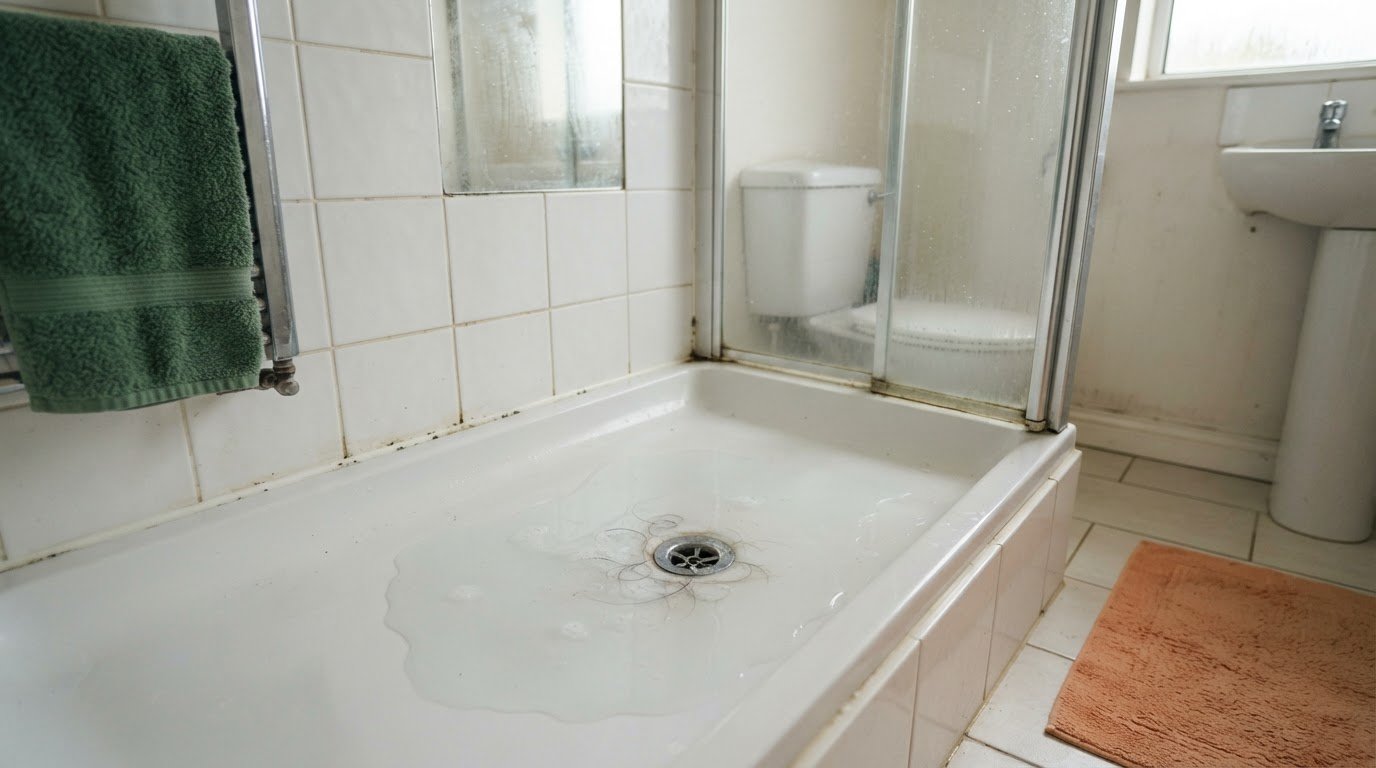
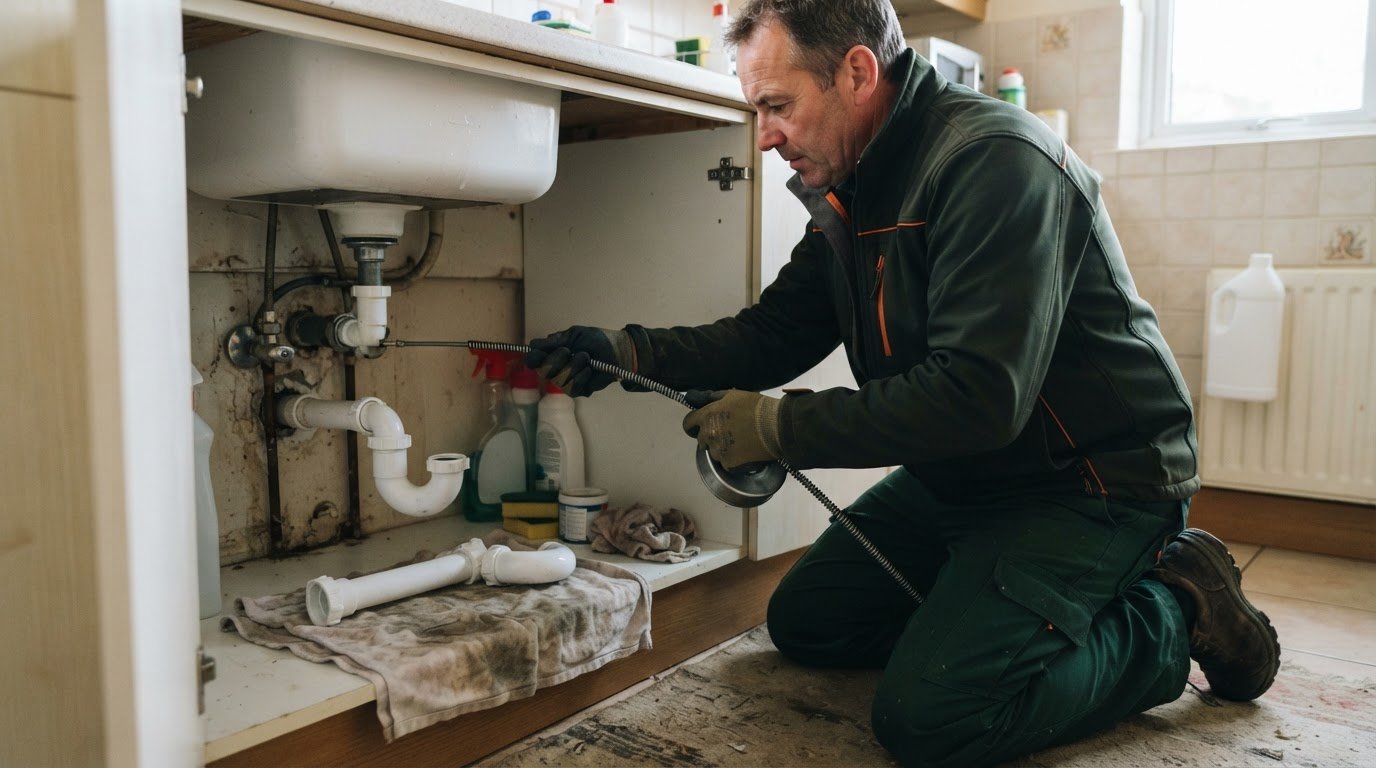
A drain snake is a flexible steel cable with a corkscrew-shaped end. A plumber feeds it into the drain and turns the cable to break up or catch an obstruction. This mechanical action suits localised clogs, such as hair near a shower waste or grease restricting a kitchen sink. It opens a route for water and waste to pass, rather than flushing the entire pipe clean.
Augers work on the same principle, with designs suited to different access points. A toilet auger, for example, reaches into the toilet trap, but even professional-grade models extend no more than 6 feet. A snake is better suited to some other small-pipe blockages. The right tool depends on where the clog sits and what is obstructing the flow.
Before choosing a method, the plumber asks which fixtures are affected and when the symptoms began. They assess access to the drain and the likely location of the blockage. If the cause or pipe condition is unclear, a camera inspection can show what is happening inside. This helps distinguish a local obstruction from a deeper or structural problem.
A blockage in the main sewer line often affects several fixtures at once. Toilets, sinks and showers may drain slowly, gurgle or cause wastewater to back up at a low-level drain. One slow basin points more towards a local clog; problems across the property suggest a shared line needs professional assessment.
The pros and cons are practical: snaking is targeted and breaks up some everyday obstructions, but may leave deposits behind. A plumber is the sensible next step when several fixtures are affected, wastewater backs up, or the blockage returns after clearing. For a persistent clog, a professional drain unblocking service can assess the obstruction and choose an appropriate method.
Comparing snaking and hydro jetting costs
Snaking generally has a lower initial cost than hydro jetting. The drain snake vs hydro jetting comparison reflects different equipment and cleaning methods, not simply time at the drain. A snake uses a cable to tackle an obstruction; jetting needs a specialist machine and pressurised water.
For a local clog, such as hair restricting a shower waste, snaking may be sufficient. The work depends on access to the pipe, the blockage’s position and whether the cable can reach it. A deep obstruction or stubborn grease buildup may need a more involved approach.
Hydro jetting costs more upfront, but flushes debris and buildup from pipe walls. That thorough clean may reduce repeat interventions when residue contributes to recurring blockages. It isn’t automatically the economical choice: older or fragile pipework may need assessment before high-pressure water is considered.
In Ireland, the price depends on the case and is given after a quote request. The obstruction, its location, pipe access, condition and suitable method affect the work involved. A quote should reflect the actual problem, such as one sink clog or recurring trouble in a longer drain run.
Compare the likely total work, not just the initial clearing. If snaking opens a path but leaves deposits behind, the blockage may return and need further attention. A drain snake vs hydro jetting comparison should account for the underlying cause, not just the first intervention.
For example, a local hair clog may need targeted mechanical clearing. A drain repeatedly blocked by grease could need a more thorough clean. These cases call for different equipment and assessment, so the method should be chosen based on the problem, not on assumptions about value.
Choose snaking for a reachable, localised obstruction when the pipe’s condition supports mechanical clearing. Consider hydro jetting when deposits extend along the pipe and its condition has been assessed. The comparison is clearest once the cause, access and suitable method are understood.
High-pressure water jetting for stubborn clogs
Hydro jetting uses pressurised water to clear stubborn obstructions and clean pipe interiors. Equipment typically delivers between 3,000 and 4,000 psi, directing water through a specialised nozzle. The water breaks up deposits, then carries loosened debris through the drain. Unlike chemical cleaners, this method uses water rather than chemicals.
Hydro jetting can tackle grease, mineral deposits, sludge and tree roots. It can also clean buildup along pipe walls, rather than simply opening a narrow route through the blockage. For example, grease coating a commercial drain line may need more than a cable opening to clear the pipe.
Inspection comes first. A plumber assesses the blockage and pipe condition before using high-pressure jets, since older or fragile pipework may be damaged. A CCTV inspection can locate an obstruction and show whether the pipe is suitable. A collapsed pipe needs replacement, not jetting.
Hydro jetting suits residential and commercial drains, including deep or difficult-to-reach clogs. Some machines can clear sewer pipes from 2 to 10 inches in diameter. The actual method depends on access, pipe condition and the type of material obstructing flow.
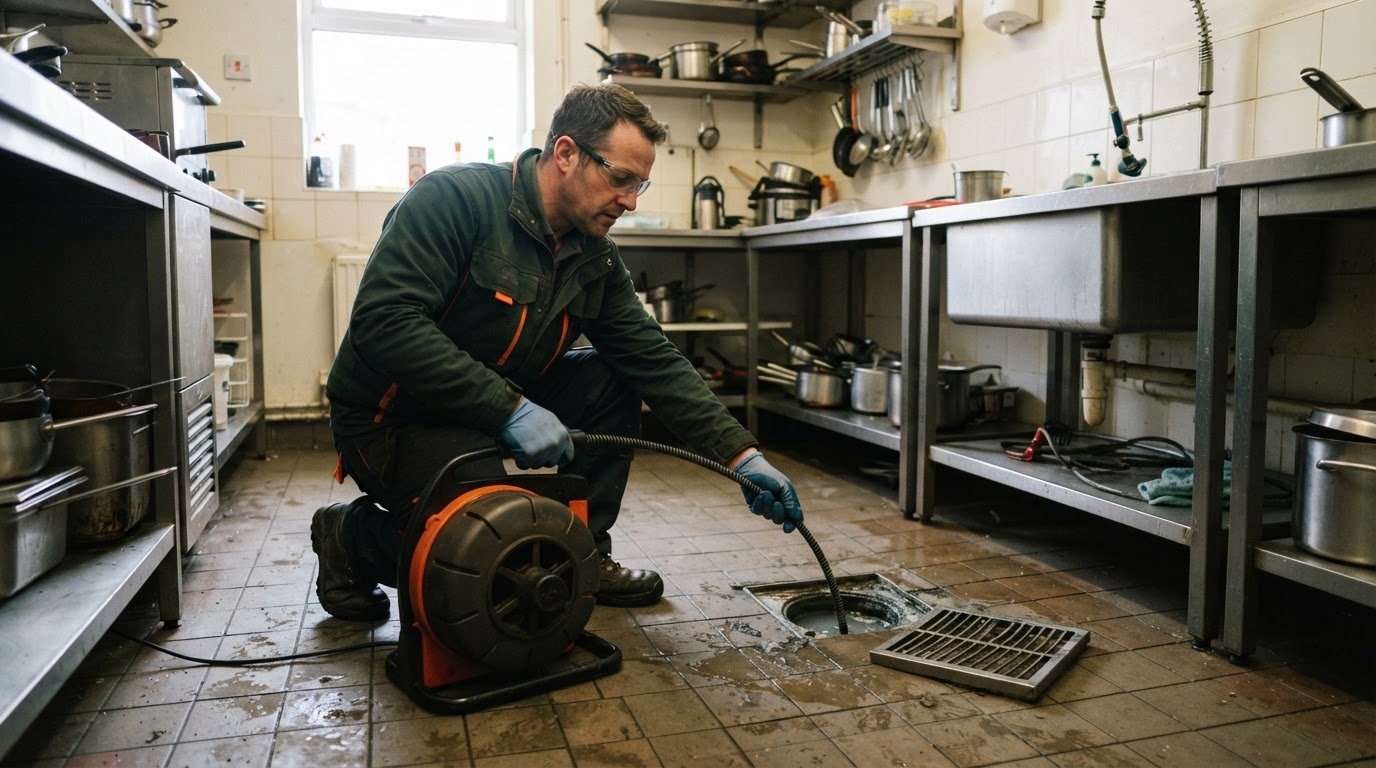
High-pressure cleaning isn’t a DIY job. A professional controls the nozzle and pressure to clear the obstruction without directing water incorrectly. If grease, food debris or sludge has built up in a commercial grease-trap line, jetting can clear deposits from the connected pipework.
Choose jetting when inspection shows the pipe is suitable and stubborn deposits need flushing from its interior. Choose mechanical clearing instead when the pipe’s condition makes high pressure unsuitable. For a recurring blockage, arrange a professional drain assessment before selecting another clearing method.
CH Enviro
CH Enviro can help when a blockage needs professional clearing or the right method is unclear. Its Drain Unblocking Service addresses blocked drains, while a CCTV Drain Survey can investigate recurring problems and show what is happening inside the pipe.
The choice between snaking and hydro jetting depends on the obstruction and pipe condition. If a survey identifies damage, No-Dig Drain Repair may be a suitable next step. The aim is to match the work to the drain, rather than repeat a clearing method without understanding why the blockage returns.
If you’re dealing with a stubborn or recurring drain blockage, contact CH Enviro to discuss the problem.
Take the next step with a clear picture
Before arranging drain work, note what the blockage is doing. Is one fixture affected, or are several drains slow? Does the problem return after clearing, or has wastewater backed up? These details help frame the issue and guide a useful assessment. The drain snake vs hydro jetting decision should follow evidence about the drain, not the assumption that the more powerful method is always right.
For a recurring or unresolved blockage, share what you’ve observed and where symptoms occur. That gives the conversation a practical starting point, whether the next step is clearing the drain, investigating it further or addressing damage. Contact CH Enviro about drain cleaning to discuss the problem and a suitable way forward. A clear account of the symptoms can help move the issue towards a practical solution.
Frequently Asked Questions
How do drain snake machines work?
A drain snake machine turns a flexible cable to work through a blockage. The operator feeds the cable into an accessible drain opening and advances it towards the obstruction. Its end can break up or catch material, helping restore flow. The cable’s progress and resistance provide clues about the clog’s location, but a camera survey can give a clearer view when the cause remains uncertain.
What is hydro jetting and when do plumbers use it?
Hydro jetting is a professional drain-cleaning method that uses pressurised water to dislodge obstructions and wash away deposits. Plumbers may use it for stubborn buildup, such as accumulated grease or mineral deposits, when the pipe can withstand the process. Pipe condition matters: an inspection helps identify damage or collapse, where jetting is unsuitable and repair may be needed instead.
How much does professional drain unblocking cost, and does it vary by method?
Professional drain-unblocking costs vary by case and method. The price depends on the case and is given after a quote request; the obstruction, its location, access to the drain, pipe condition and work required affect the cost. Snaking and hydro jetting involve different equipment and cleaning approaches, so the suitable method is part of the assessment rather than a fixed price comparison.
What are plumbing snakes?
Plumbing snakes are flexible cables designed to reach into drains and mechanically deal with obstructions. A professional may use a hand-held snake for an accessible, local blockage, or a machine-operated cable for another drain-clearing task. They are not interchangeable with hydro-jetting equipment: a snake works through physical contact with the clog, while jetting uses water to dislodge and flush material.
What are the pros and cons of hydro jetters?
A hydro jetter can remove deposits from pipe walls as well as clear a blockage, using water rather than chemical cleaners. Its main drawback is that high pressure can damage older or fragile pipes. It also cannot solve every drain problem: a collapsed pipe needs replacement. An inspection helps determine whether the pipe’s condition makes jetting appropriate.
Which drain blockages can a drain snake clear, and which require hydro jetting?
A snake can suit a reachable local obstruction, such as material restricting one fixture. Hydro jetting may be more appropriate when stubborn deposits coat a longer section of suitable pipe. Neither method is right for every blockage. A collapsed pipe, for example, requires repair or replacement, not jetting; the obstruction’s location and the pipe’s condition guide the choice.
Comments