
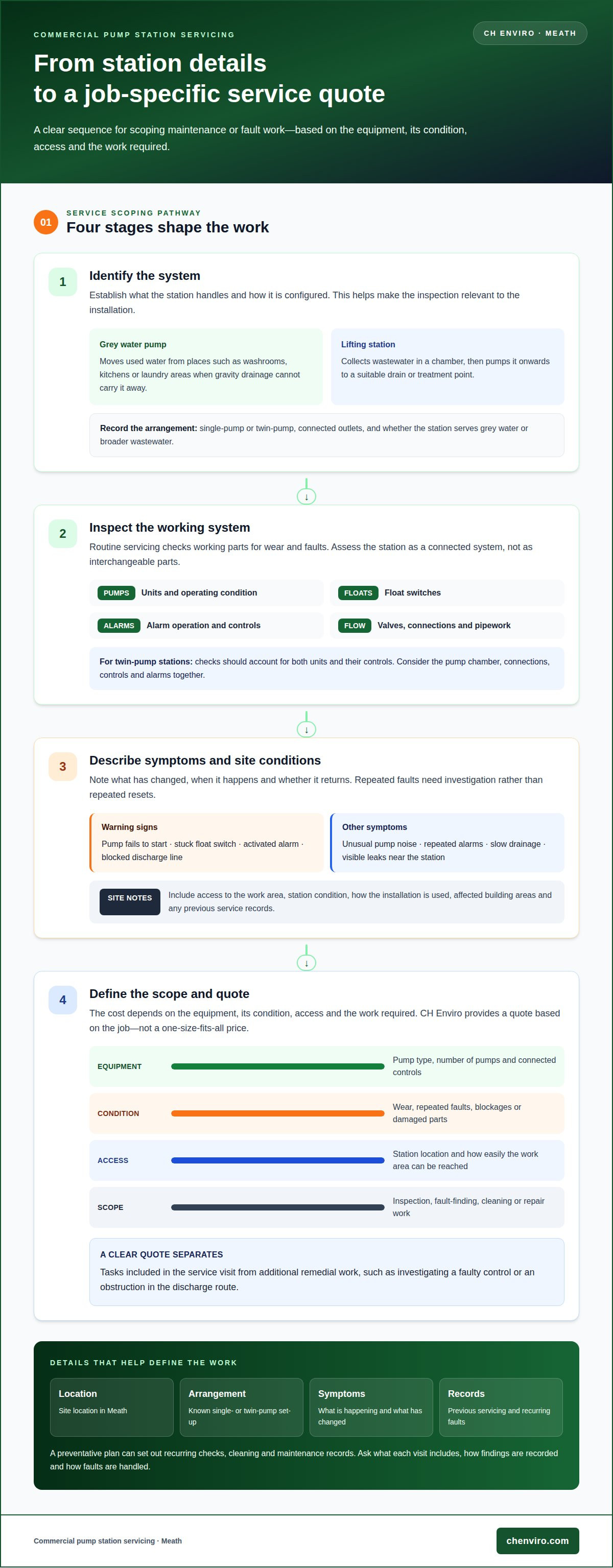
Commercial Pump Station Servicing and Costs in Meath
Commercial pump station servicing in Meath is scoped around the equipment and the work required, rather than a standard price. It can include routine maintenance and attention to faults in grey water pumps and lifting stations. Whether a station uses one pump or two is one factor that shapes the servicing.
It’s reasonable to want a clear picture of what servicing involves before arranging a visit. Maintenance can help identify issues and keep the station operating as it should. The cost depends on factors such as the pump arrangement, station condition, access and scope of work. CH Enviro provides a quote based on the job.
This guide explains what commercial pump station maintenance can involve, how grey water pumps and lifting stations differ, and what affects the work required. It also covers servicing in Meath, so you can identify practical next steps for your site.
Table of Contents
Commercial pump station servicing and maintenance
Routine servicing checks the station’s working parts for wear and faults. A planned approach helps businesses address issues before they interrupt pumping.
Preventative Maintenance Plans
A preventative plan sets out recurring checks, cleaning and maintenance records for the station. It should cover the pumps, floats, alarms, valves and pipework, taking account of the equipment’s condition and operating demands. Ask what each visit includes and how findings are recorded. Clear records help track recurring faults and identify when repairs need attention.
Choosing a Meath Servicing Provider
Choose a servicing plan that matches your station’s equipment and the work required. Ask for a clear description of the inspection and reporting, and how faults are handled. A site with two pumps, for example, needs checks that account for both units and their controls. The maintenance plan should reflect your site’s operating needs, not rely on a generic checklist.
Common Failures and Warning Signs
Common problems include a pump that fails to start, a stuck float switch, an activated alarm or a blocked discharge line. Warning signs can include unusual pump noise, repeated alarms, slow drainage or visible leaks near the station. Note when symptoms occur and whether they return after a reset. Repeated faults need investigation rather than repeated resets, as the cause may remain.
Heat pumps are separate equipment from wastewater pump stations. Regular heat pump maintenance can help identify problems early and keep systems working as they should. For a pump station, scheduled cleaning and inspection can reveal wear before it develops into a larger fault. In Ireland, the requirements relevant to a commercial station depend on its purpose, design and discharge arrangements. Servicing should take account of applicable site obligations and equipment instructions.
Commercial grey water pumps and lifting stations
Grey water pumps move used water from places such as washrooms, kitchens or laundry areas when gravity drainage cannot carry it away. A lifting station collects wastewater in a chamber, then pumps it onwards to a suitable drain or treatment point. The right arrangement depends on the water source, where it must go and the building’s drainage layout.
Commercial lifting stations in County Meath may use one pump or two. A single-pump station has one pumping unit. A twin-pump arrangement has two units, with the control system managing their operation according to the installation’s design. This distinction matters during servicing: the pumps, controls and connections need to be assessed in context, rather than treated as interchangeable equipment.
For example, a business with a lower-ground washroom may need a lifting station because its wastewater cannot flow by gravity to the drainage connection. A facility producing grey water has a different flow profile from one handling wastewater from several building areas. Identifying the connected outlets helps establish what the station serves and which components need attention during inspection.
Servicing should consider the pump chamber, pumps, pipe connections, controls and alarms as one working system. Check for visible leaks, unusual noise, changes in pump cycling and signs that water is not moving as expected. For a twin-pump set, the assessment should consider both units and their controls. Site usage and station condition help shape the maintenance scope.
Meath also has larger wastewater infrastructure. A sewage pumping station in Ratoath was designed to serve 334 new houses. That example is not a specification for commercial premises; it shows why station design and the number and type of connected users matter when assessing pumping needs.
Before planning work, identify whether the system handles grey water or broader wastewater, and whether it uses one pump or two. These details help make the inspection relevant to the installation and its role in the building.
Commercial service pricing
The cost of servicing a commercial pump station depends on the equipment, its condition and the work required. CH Enviro provides a quote based on the job, taking account of the station layout, access and required work. A routine inspection differs from a visit involving fault diagnosis, clearing a blockage or replacing a damaged component.
To scope the work, consider the station’s pump arrangement and how the installation is used. A single-pump system has different components from a twin-pump station. The condition of the chamber, controls, alarms and discharge pipework also affects the work involved. Investigating a fault may take more work than a planned inspection where no repair is identified.
Equipment: pump type, number of pumps and connected controls.
Condition: wear, repeated faults, blockages or damaged parts.
Access: the station’s location and how easily the work area can be reached.
Scope: inspection alone, fault-finding, cleaning or repair work.
These details help distinguish the service visit from additional remedial work. An inspection, for example, may identify a faulty control or an obstruction in the discharge route. The quote should make clear which tasks are included and which repairs are additional. This breakdown helps a facilities manager understand what the proposed work addresses before approving it.
For a useful quote request, provide the site location in Meath, the station’s known pump arrangement, the symptoms and any previous service records. Describe what has changed, such as an alarm sounding or wastewater draining slowly. Clear details help define the assessment. If the station serves several parts of a commercial building, explain which areas are affected. This lets the quote reflect the installation and reported problem, rather than a generic assumption.
Do Meath pump station service providers offer emergency call-outs 24/7?
There is no county-wide answer: emergency call-out hours depend on each provider’s service arrangement. A planned maintenance visit and an urgent response are different services, so don’t assume routine servicing includes round-the-clock attendance. For a Meath business, the practical point is to know how to report a pump failure and what information helps explain its urgency.
Assess the impact first. A stopped pump serving a busy commercial kitchen, for example, may disrupt operations sooner than a fault affecting an unused area. An active alarm, rising water or wastewater backing up signals a different situation from unusual noise with no change in drainage. Describe what is happening, where the station is and which building areas are affected.
When requesting help, give the responding team useful details:
The site address and access arrangements for the pump station.
Whether an alarm is active or the pump appears to have stopped.
Any visible overflow, backing-up wastewater or affected facilities.
Whether the installation has a single pump or twin pumps.
Clear information helps assess the issue and identify the equipment involved. Avoid repeatedly resetting controls when the alarm returns, as the underlying fault may remain. Record when the problem began and any changes in symptoms. These details can help distinguish a recurring issue from a sudden operational failure.
For planned resilience, establish how your site reports faults outside normal working hours and what response arrangements apply. Keep the station location and access instructions available to the person responsible for facilities. This preparation is useful even if an issue occurs during working hours, especially where the station serves several parts of a commercial building.
If a blockage is affecting drainage at your premises, arrange commercial drain unblocking to address that part of the problem.
CH Enviro
CH Enviro provides pump station maintenance and can also help when an issue involves a wider drainage or wastewater problem. A blockage may call for drain unblocking, while a CCTV drain survey can help investigate drainage concerns. No-dig drain repair and septic tank cleaning address other specific drainage needs.
When describing the problem, share the site location, symptoms and relevant service records. This helps clarify whether a drainage service fits the issue, rather than treating every pump station fault as the same job. CH Enviro also provides wastewater treatment services for ongoing wastewater concerns.
Contact CH Enviro to discuss the drainage or wastewater problem affecting your site.
Set up your next maintenance decision
Keep a clear record of pump alarms, drainage changes and work already completed. This information can help distinguish a station fault from a wider blockage or drain defect. For commercial pump station servicing in Meath, a site-specific discussion can establish whether a related drainage issue needs attention alongside the station.
CH Enviro offers a Drain Unblocking Service, CCTV Drain Survey and No-Dig Drain Repair. These services address different drainage problems, from clearing an obstruction to investigating or repairing a drain. They are not a substitute for pump-station work, but may be relevant when the symptoms point to a drainage issue.
Share the site location and a concise description of the problem to start the conversation. Contact CH Enviro about servicing and take a clear next step for your premises.
Frequently Asked Questions
Which companies service commercial pump stations in County Meath?
CH Enviro provides pump station maintenance for commercial customers in Meath. When enquiring about commercial pump station servicing in Meath, describe the station’s function and the issue affecting it. This helps establish whether the need concerns pump maintenance, a drainage fault or both. CH Enviro also provides related drainage services, including CCTV surveys and no-dig repairs.
What commercial pump station maintenance services are available in Meath?
CH Enviro provides pump station maintenance alongside services for connected drainage problems, including CCTV drain surveys, drain unblocking and no-dig drain repairs. A recurring blockage may need investigation of the drain route, while a pump fault needs attention to the station itself. Identifying the symptoms helps define the relevant service.
How often should a commercial pump station be serviced?
Set the servicing interval around the station’s operating demands, equipment guidance and maintenance history. A site with frequent alarms or recurring faults may need a different plan from a lightly used installation with stable operation. Review service records for repeated issues, changes in pump behaviour and work completed. Use those findings to set a practical schedule for the premises.
What is the typical cost of commercial pump station servicing in Meath?
There is no single cost for every commercial station. CH Enviro provides a quote based on the job. The quote reflects factors such as pump configuration, station condition, access, reported symptoms and the work required. Explaining the fault and identifying the site helps define the job accurately.
What is included in a commercial pump station inspection and service?
The inspection scope depends on the station and the requested work. A useful service record states what was examined, any defects observed and recommended actions. It should also distinguish completed inspection tasks from repairs requiring separate approval. This gives the facilities manager a clear account to keep with previous maintenance records and use when planning follow-up work.
How can businesses arrange a pump station service contract in Meath?
Start by giving CH Enviro the site location, the station’s known configuration, its purpose and any recurring symptoms. Include available service records so the maintenance requirements can be discussed in context. Ask for a proposed scope covering planned visits, reporting and how additional repairs are handled. Contact CH Enviro to discuss commercial pump station servicing for your Meath site.
Comments