
Commercial Kitchen Drain Maintenance and Inspections in Kildare
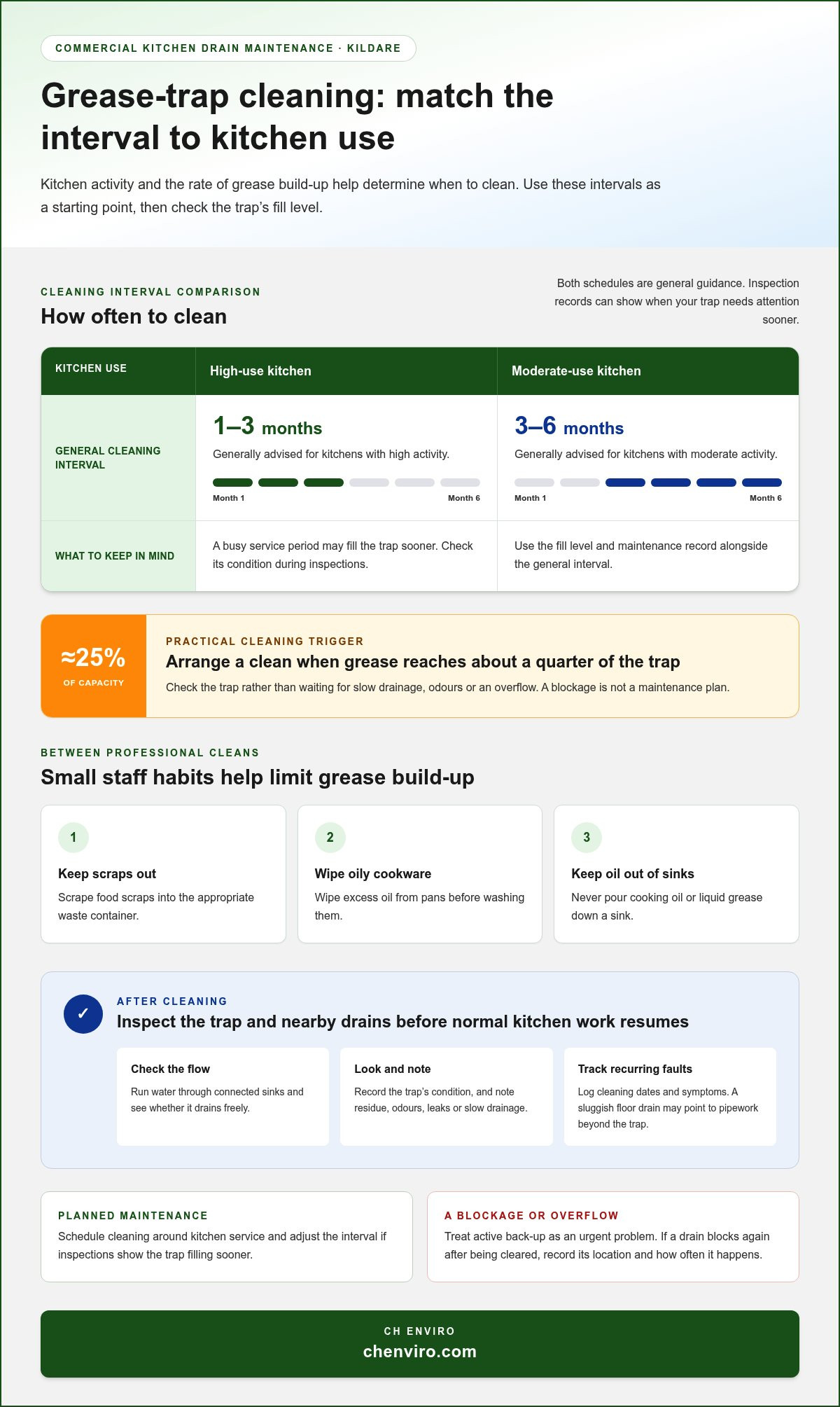
For commercial kitchen drain maintenance in Kildare, grease traps in high-use kitchens are generally cleaned every 1-3 months, while moderate-use kitchens are generally cleaned every 3-6 months. Arrange cleaning when fats, oils and grease reach approximately 25% of the trap’s capacity. Waiting for a blockage is not a maintenance plan.
Kitchen drainage problems can disrupt food preparation and create a mess that needs prompt attention. A clear routine helps you spot warning signs, keep grease build-up under control and know what to expect after cleaning. The right schedule depends on how heavily the kitchen is used and how quickly grease accumulates.
This guide explains what to do when a drain blocks, how grease traps work and what to check after cleaning. You’ll also learn how to plan ongoing commercial kitchen drain maintenance in Kildare and when drain unblocking, a CCTV drain survey or grease trap maintenance may help.
Table of Contents
Emergency response availability and timing
A severe blockage can interrupt kitchen work and cause wastewater to back up. Commercial kitchen drain maintenance in Kildare combines planned cleaning with a clear response to urgent problems.
Emergency Drain Cleaning
Emergency drain unblocking addresses an active blockage or overflow that cannot wait for routine maintenance. Note which fixture is affected, when the fault began and whether wastewater is backing up elsewhere. A blocked sink and a slow floor drain, for example, may indicate a wider issue. Sharing these details helps focus the response.
Commercial drainage contractors in Kildare provide emergency unblocking services. The important distinction is whether the call-out addresses the immediate obstruction or includes investigation of a recurring fault. If a drain blocks again after it has been cleared, note the location and frequency of the problem. That record can help determine whether further inspection is needed.
Scheduled and Emergency Call-outs
Scheduled cleaning can be planned around kitchen service, while emergency unblocking addresses a sudden blockage or overflow. Grease trap maintenance can also form part of a regular plan. Commercial kitchen drain maintenance in Kildare may involve both planned care and urgent work, depending on whether the system needs routine attention or has stopped working properly.
Available call-out options include early-morning, late-evening and emergency visits. Call-out availability can vary, so confirm the timing when arranging a visit. When arranging an urgent visit, provide the Kildare site address, name the affected drain and explain the severity. Keep staff clear of standing wastewater and avoid using fixtures that are backing up while the issue is addressed.
How grease traps catch fats, oils and grease
Food businesses in Ireland must manage fats, oils and grease responsibly to help prevent sewer blockages and environmental damage. In a restaurant, keep grease out of sinks and drains, use the grease trap correctly and arrange for its maintenance before accumulated waste causes problems.
A grease trap slows the flow of kitchen wastewater. As the water cools, fats and oils separate and rise, while heavier food particles settle. The trap holds this material back so less grease passes into the drainage system. It works effectively only when there is enough clear space for wastewater to flow through.
During service, washing a greasy pan straight into the sink adds to the trap’s load. Scrape food scraps into the appropriate waste container and wipe excess oil from cookware before washing. Do not pour cooking oil or liquid grease down sinks. These steps help reduce avoidable build-up between professional cleanings.
Cleaning frequency depends on kitchen use and the rate of accumulation. High-use kitchens are generally advised to clean traps every 1-3 months; moderate-use kitchens, every 3-6 months. A further practical trigger is grease reaching approximately 25% of the trap’s capacity. Check the trap during inspections rather than waiting for slow drainage, odours or an overflow to signal a problem.
Neglected grease can restrict flow, contribute to blockages and leave a kitchen dealing with wastewater backing up through a sink or floor drain. Emptying removes the accumulated grease and sludge; disposal matters too. Collected material should be transported to approved treatment facilities in accordance with Irish environmental legislation. For a planned clean or accumulated waste, grease trap cleaning and maintenance can help keep the unit and kitchen drainage in working order.
Food businesses should keep fats, oils and grease out of sinks and drains, use grease traps correctly, and arrange removal before collected waste causes problems. Collected grease and sludge should be transported to approved treatment facilities in accordance with Irish environmental legislation.
Post-cleaning inspections and maintenance advice
After grease trap maintenance, inspect the unit and nearby drains before normal kitchen work resumes. Record the trap’s condition, check wastewater flow and note any odours or slow drainage for the next maintenance visit.
Cleaning Frequency and Capacity
Match the schedule to kitchen use and the trap’s fill level. High-use commercial kitchens generally need cleaning every 1-3 months, while moderate-use kitchens generally need it every 3-6 months. Arrange a clean when fats, oils and grease reach approximately 25% of capacity. These thresholds provide a practical starting point; inspection records help identify whether a busy service period is filling the trap sooner.
A post-cleaning check should cover more than the trap itself. Run water through connected sinks and see whether it drains freely. Look for residue around access points and note persistent odours, leaks or slow drainage. If a floor drain remains sluggish, the blockage may be further along the pipework rather than inside the trap. Record the affected fixture to help track recurring faults.
Staff Steps to Prevent Blockages
Staff can limit grease entering the system during each shift. Scrape food scraps into the correct waste container, wipe oily pans before washing and never pour cooking oil into a sink. Clear visible debris from sink strainers, then report slow drainage or recurring odours promptly. These steps help reduce build-up between professional cleans and flag blockages before wastewater backs up.
Keep a maintenance log with the cleaning date, trap condition and any drainage symptoms. Review the entries after busy service periods. If the trap reaches its capacity sooner than expected, adjust the planned maintenance interval. If the trap is clear but a drain still runs slowly, arrange a separate drainage assessment. This helps target the next step instead of repeating a trap clean that may not solve the problem.
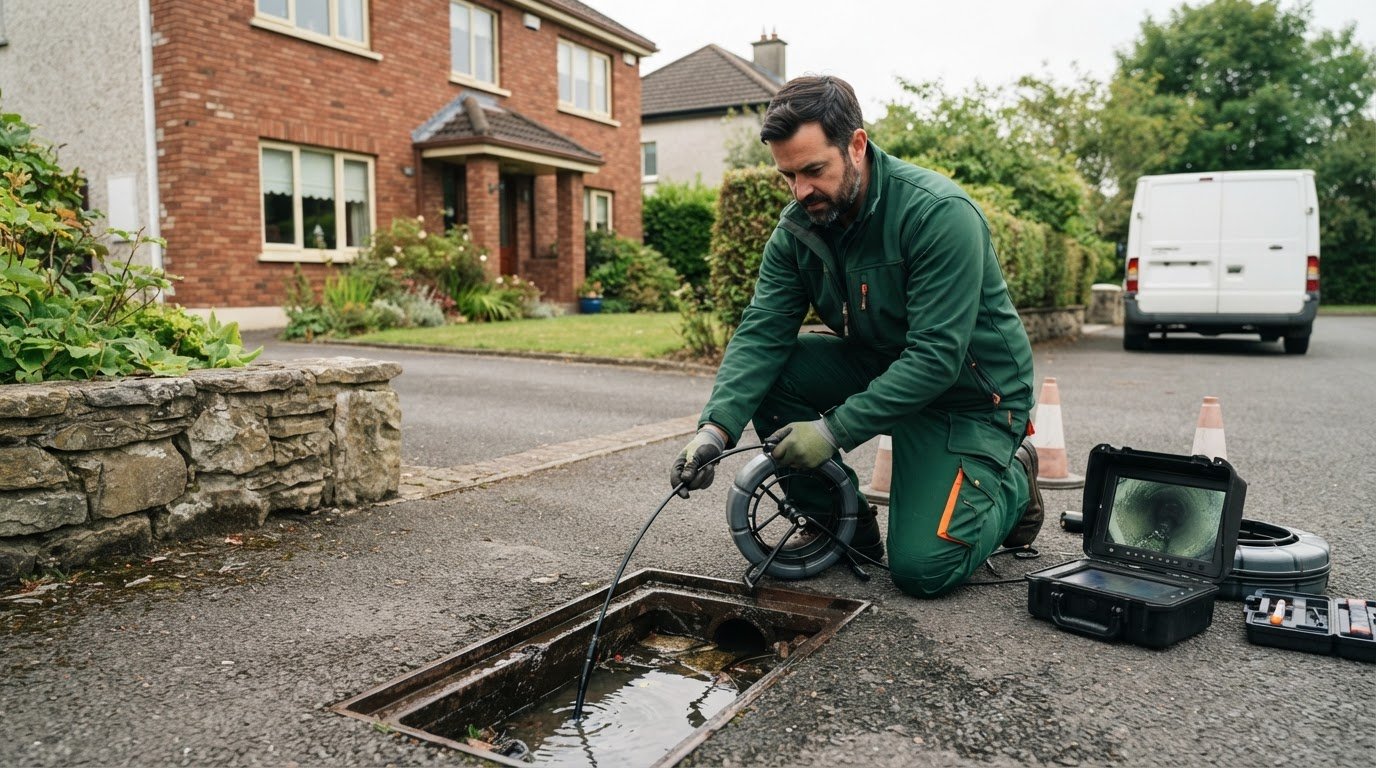
Drainage services for restaurants and other commercial properties
Restaurants, cafés and other commercial premises in Kildare can experience different drainage faults. One kitchen may have a blocked sink, while another may see wastewater rising through a floor drain. Record the affected fixtures, when symptoms began and whether they worsen during busy service. These details help clarify whether the issue is isolated or affects several parts of the drainage system.
Drainage work may involve unblocking, inspecting pipework or repairing damage. The next step depends on what happens after the immediate problem is addressed. If the same drain blocks again, a CCTV survey can inspect the pipework. If it identifies damage, no-dig drain repair may be suitable. Keep a record of symptoms and previous work at each premises to help identify recurring faults.
Planning commercial kitchen drain maintenance in Kildare starts with practical site details. Record the full address, the affected area and any access arrangements, particularly in a shared building. A kitchen may have a separate service entrance or restricted access to drainage points. Clear instructions help staff and contractors locate the relevant area without disrupting unrelated parts of the premises.
For maintenance outside normal kitchen activity, coordinate access with the person responsible for the premises. Name a staff contact and explain which drains need attention. Note whether the fault continues after service or appears only during busy preparation. This information helps shape the work around actual operating patterns rather than a general description of the problem.
A commercial kitchen drain maintenance plan for Kildare premises also benefits from clear records. Log the date, location, affected fixture, previous work and recurring symptoms. Businesses with multiple kitchens can compare records to see whether a problem repeats at one site. This makes it easier to describe the issue and choose the next step.
If a commercial drain is blocked or recurring faults are disrupting kitchen work, arrange commercial drain support suited to the issue.
CH Enviro: Drain Unblocking Service
CH Enviro’s Drain Unblocking Service can help when a commercial kitchen drain is blocked or wastewater is backing up. Describe the affected fixture and whether the problem keeps returning. This helps distinguish an immediate blockage from a recurring issue that may need further investigation.
If unblocking does not resolve recurring symptoms, a CCTV Drain Survey can inspect the pipework and help locate the underlying fault. Where a damaged pipe needs attention, No-Dig Drain Repair may be an option. For premises that rely on a septic system, septic tank cleaning addresses a separate part of wastewater management.
Choose the service that matches the problem: drain unblocking for restricted flow, a survey to investigate recurring faults, or repair when pipe damage is identified. For help with commercial drainage in Kildare, contact CH Enviro.
Plan the next step for your kitchen
Reliable commercial kitchen drain maintenance in Kildare starts with understanding the premises’ needs. Consider which drainage problems interrupt service most, whether faults return after cleaning and how maintenance can fit around kitchen operations. This gives you a practical basis for prioritising work instead of treating every symptom as an isolated event.
CH Enviro provides a Drain Unblocking Service for restricted flow, a CCTV Drain Survey to investigate recurring problems, and No-Dig Drain Repair when pipework needs repair. Choose the service that fits the issue and describe the symptoms and affected area when you enquire. A clear description helps focus the discussion on the drainage problem.
Contact CH Enviro about drain maintenance to discuss the next step for your commercial kitchen. A planned approach can help you manage drainage with greater confidence.
Frequently Asked Questions
What commercial kitchen drain maintenance services are available in County Kildare?
Commercial kitchens in Kildare can use drain unblocking, CCTV drain surveys, no-dig drain repairs and grease trap maintenance. The right service depends on the fault: unblocking addresses restricted flow, while a survey can investigate recurring problems in the pipework. If the same sink backs up after unblocking, for example, a survey may help identify what needs attention next.
How often should commercial kitchen drains be inspected and cleaned?
Grease trap cleaning frequency depends on kitchen usage and how quickly waste collects. In Kildare, guidance is every 1-3 months for high-use kitchens and every 3-6 months for moderate-use kitchens. Use inspection notes to spot changes, such as faster build-up after a busier service period. Drain inspections should also respond to symptoms, including recurring slow flow or more than one affected fixture.
How should a commercial kitchen grease trap be cleaned and maintained?
Arrange professional grease trap maintenance, then record the unit’s condition and any signs of damage or persistent odour. Keep food scraps and cooking oil out of sinks to limit avoidable waste entering the trap. After cleaning, run water through connected fixtures and note whether it flows normally. If symptoms remain, the restriction may be elsewhere in the drainage system.
What are the signs of a blocked or failing commercial kitchen drain?
Watch for slow-flowing sinks, gurgling, unpleasant smells or wastewater appearing around a floor drain. Symptoms affecting several fixtures at once may point to a shared drainage issue rather than a single blocked sink. Note where they occur and whether they worsen during kitchen service. This record helps describe the problem and distinguish a recurring fault from an isolated obstruction.
What are the health, safety and business risks of neglected kitchen drains?
Neglected drains can cause blockages, wastewater overflows, unpleasant odours and disruption to kitchen operations. Standing wastewater can also create a slip risk. Grease entering sewer systems contributes to blockages and environmental damage. If water backs up near food preparation areas or staff walkways, stop using the affected fixture, keep the area clear and arrange an assessment.
What are the Irish regulations for grease traps and commercial kitchen wastewater?
Food businesses in Ireland must manage fats, oils and grease responsibly to help prevent sewer blockages and environmental damage. Use grease traps correctly and ensure collected grease and sludge are transported to approved treatment facilities in accordance with Irish environmental legislation.

Comments