
Why Does My Drain Smell? Common Causes and Solutions for Irish Homeowners
- chenviro2
- Jun 15
- 12 min read
A foul odour from your kitchen or bathroom is rarely just a sign of a dirty house; it is often a warning signal from your home’s internal infrastructure. If you find yourself frequently searching "why does my drain smell Ireland" after a period of heavy rain or a long dry spell, you are likely dealing with more than just surface grime. These persistent smells are disruptive and often cause genuine embarrassment when guests visit, making your living space feel unhygienic despite your best cleaning efforts.
It is natural to feel a sense of dread about the health impacts of sewer gas or the potential cost of major pipe repairs. We understand that you want a permanent solution rather than a temporary mask. This article will help you pinpoint the exact source of the stench and determine if you can fix it yourself. We will examine common culprits like grease build-up and dry P-traps, while also explaining when you need a professional CCTV drain survey to rule out structural failures or vermin issues.
Key Takeaways
Learn to distinguish between the rotten egg scent of sewer gas and the musty odours caused by bacterial growth in your plumbing.
Understand why unused guest bathrooms or heavy rainfall are often the hidden reasons why does my drain smell Ireland.
Identify when a simple DIY cleaning method is sufficient and when you need professional diagnostics to find structural leaks.
Discover how septic tank issues and external drainage problems can push foul air back into your living spaces.
Explore how advanced tools like CCTV surveys and high-pressure jetting provide a permanent solution to persistent smells.
Table of Contents
Decoding the Stench: Identifying Different Drain Odours
Identifying the specific scent is the first step in solving the mystery of why does my drain smell Ireland. Odours are chemical signatures of what's happening inside your pipes. You shouldn't just pour bleach down and hope for the best. You need to understand what the air is telling you. Different problems produce distinct smells, and recognising them can save you time and money on unnecessary repairs.
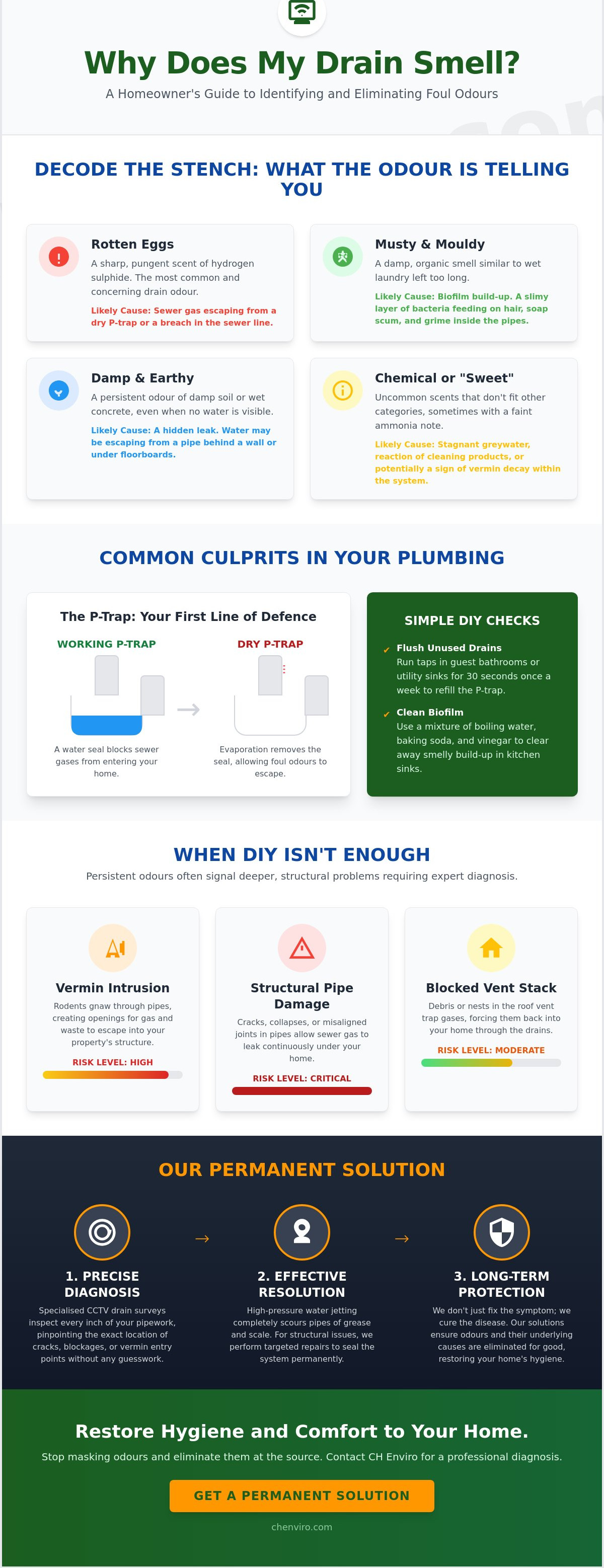
Rotten eggs: This sharp, pungent scent indicates hydrogen sulphide. It's the most common sign of a breach in your drainage system or a dried-out trap.
Musty or mouldy: This usually points to a buildup of biofilm. Hair, soap scum, and skin cells collect in the trap, creating a breeding ground for bacteria.
Damp and earthy: This is often a red flag for a leak. If the scent is persistent but you can't see water, it may be escaping behind a wall or under floorboards.
Chemical or "sweet" smells: These are less common but often linked to stagnant greywater or a reaction between different cleaning products sitting in a pipe.
Is Sewer Gas Dangerous?
High concentrations of these gases aren't just unpleasant. They can be harmful. To properly assess the risk, you should understand what is sewer gas? and how it behaves. It's a complex mixture of toxic and non-toxic gases, including methane. Whilst methane itself is non-toxic, it's highly flammable in extreme concentrations. If the odour is overpowering and causes headaches or nausea, ventilate the area immediately. Open all windows and doors to clear the air whilst you wait for a professional inspection. Safety must come first.
Where is the Smell Coming From?
Isolate the source before calling for help. Start by checking individual fixtures. If the smell is only in the kitchen, it's likely a localised blockage caused by food waste. If every drain in the house is affected, the problem is systemic. This often points to a blocked vent stack on the roof or a full septic tank. Don't forget "dead legs" in your plumbing. These are pipes leading to guest bathrooms or utility sinks that are rarely used. The water in the trap evaporates, allowing gas to flow freely into the room. Run the taps in every room once a week to prevent this. It's a simple habit that stops most common issues before they start. If the problem persists after flushing the pipes, the cause is likely structural.
The Science of Smelly Pipes: Common Culprits in Irish Plumbing
Understanding the mechanics of your plumbing is essential to stopping the stench. Most modern Irish homes rely on a simple but effective physical barrier to keep sewer air out. When this barrier fails, you start asking why does my drain smell Ireland. It isn't just about what you put down the sink; it's about how the system manages air pressure and water levels.
The Role of the P-Trap and U-Bend
Physics plays a major role in your home’s hygiene. Every sink, toilet, and shower has a P-trap or U-bend. This curved section of pipe holds a small amount of standing water. This water acts as a literal seal, blocking gases from entering your home. Identifying why does my drain smell Ireland often starts with checking the least-used sink in the house. If a guest bathroom or utility room goes unused for weeks, that water evaporates. You might hear gurgling sounds as the air pressure shifts. Simply running the tap for 30 seconds refills the trap and restores the seal. It's the easiest fix for a smelly drain.
Whilst biofilm is often easy to treat with regular cleaning, it can become a persistent nuisance if left to grow. Biofilm is a slimy layer of bacteria that feeds on soap scum, hair, and skin cells. It clings to the walls of your pipes and emits a musty odour. Over time, this buildup can restrict flow. Additionally, your plumbing needs to breathe through a vent stack, often called a "stink pipe," on the roof. If birds build a nest or debris blocks this vent, sewer gases can't escape upwards. Instead, they are forced back through your internal traps.
Vermin and Drainage Integrity
A persistent, foul smell can sometimes signal a more serious structural issue. Rodents are a frequent cause of drainage failure in urban areas. They can gnaw through plastic pipes or exploit small cracks in older clay systems. This damage allows sewer gas to leak into wall cavities or under floorboards long before you see a wet patch. This is why vermin control Dublin is often a necessary part of drain maintenance. A persistent odour that smells like ammonia or decay might actually be a sign of a rodent issue within the sewer line itself.
Small structural breaches are the hardest to find. These are tiny cracks in the pipework that allow gas to escape but aren't large enough to cause a visible water leak. These breaches often occur at joints or where the pipe enters the house. For those living in rural areas, external systems require even more attention. Following official guidance on septic system care is vital to prevent backups that push odours into the house. If you've tried the basics and the smell remains, a professional CCTV Drain Survey can identify the exact location of the damage without digging up your garden.
External Factors: Septic Tanks, Heavy Rain, and Outside Drains
Sometimes the solution to why does my drain smell Ireland isn't found under your kitchen sink. External factors, from the unique architecture of Dublin terraces to the unpredictable Irish weather, play a massive role in how your drainage system performs. When the problem originates outside, internal cleaning will only provide a few hours of relief before the odour returns. You must look at the broader environment to find a permanent fix.
Septic Tank Odours in Rural Ireland
For the 500,000 people in Ireland relying on private wells and domestic systems, the septic tank is often the primary suspect. If you notice a foul scent whilst walking through your garden, you need to act quickly. A smell near the percolation area suggests the soil is saturated, whereas a stench near the tank usually means it's overfull. Regular septic tank cleaning Ireland is essential to prevent these issues. Most systems require desludging every one to three years to maintain efficiency. You might also notice smells more during "thick" weather. Low atmospheric pressure can trap sewer gases close to the ground, preventing them from dispersing into the air as they normally would.
The "After the Rain" Phenomenon
Ireland's frequent heavy downpours can overwhelm even well-maintained systems. When a sudden deluge enters the sewer pipes, it rapidly displaces the air inside. If your vent stack is partially blocked or the system is under strain, this displaced air is forced back through your internal P-traps. This is why ground-floor toilets and showers often smell immediately after a storm. If the scent lingers long after the weather clears, it's a sign that the pressure has actually broken the water seal in your traps, and you'll need to flush them with fresh water to reset the barrier.
Don't overlook your outside gullies and soil pipes. In many older Dublin terrace houses, the soil stack is located on the exterior wall. Over decades, the seals on these pipes can perish, allowing sewer gas to drift into open upstairs windows. Similarly, outside drains often collect fallen leaves and organic debris. When this material rots in a damp gully, it creates a heavy, compost-like smell right outside your doors. Keeping these areas clear of debris is a simple but effective way to maintain a fresh-smelling home environment. If clearing the surface debris doesn't work, the blockage is likely deeper in the line and requires professional equipment to dislodge.
Many homeowners start their search for why does my drain smell Ireland by looking in the kitchen cupboard for baking soda and vinegar. Whilst this classic combination creates a satisfying fizz that can loosen light surface biofilm, it is rarely a permanent fix for deep-seated odours. If the smell is caused by a structural breach or a venting issue, a chemical reaction in the sink won't reach the source of the problem. You are simply masking a symptom rather than curing the cause.
One often overlooked area is the overflow hole in bathroom basins. This small aperture provides a damp, dark environment where bacteria thrive undisturbed. Cleaning it with a small brush and a mild disinfectant can often resolve a mystery scent that persists despite a clean drain. However, you should avoid using harsh industrial chemicals like sulphuric acid. These substances are highly corrosive and can damage older pipework or kill the beneficial bacteria in your septic system, leading to even worse odours later. Safety and pipe integrity should always be your priority.
Quick DIY Fixes to Try First
Before calling for help, try these simple steps to rule out surface-level issues:
Flush with hot water: Use hot (not boiling) water to refresh the water seals in your traps. This is especially effective after returning from holiday or for guest bathrooms that are rarely used.
Clear the shower trap: Remove the hair trap from your shower floor. Decomposing hair and soap scum are the primary causes of "rotten" smells in bathrooms.
Check your dishwasher: Food particles trapped in the filter can rot and push smells back through the kitchen plumbing. Clean the filter every month to prevent this.
When to Call a Professional Drain Unblocker
There is a point where DIY efforts become counterproductive. If you notice the signs of blocked drain Ireland, such as slow-draining water or persistent gurgling, the problem is likely a physical obstruction deep in the line. These obstructions require mechanical removal or high-pressure water jetting to clear properly.
When multiple drains across the house begin to smell simultaneously, the issue is often structural or related to the main sewer line. Older properties with clay pipes are particularly susceptible to root ingress or collapsed sections that trap waste. If your efforts haven't cleared the air within 24 hours, it's time to stop pouring products down the sink. You need a professional Drain Unblocking Service to diagnose the root cause and ensure your home remains hygienic. Trying to force a blockage through with manual tools can often lead to cracked pipes, turning a simple unblocking job into a costly repair.
Professional Diagnostics: How CH Enviro Eliminates Odours for Good
When domestic remedies fail to answer the question of why does my drain smell Ireland, it is time for a methodical diagnostic approach. Persistent odours are often symptoms of deep-seated issues that surface cleaning cannot reach. At CH Enviro, we use advanced technology to see what is hidden behind walls and under foundations. Our goal is to move beyond temporary masks and provide a permanent resolution to the foul air in your home or business.
The Power of a CCTV Drain Inspection
A professional camera inspection is the only way to see exactly what is happening inside your pipes. Whilst you might suspect a simple blockage, a camera can reveal structural issues like "bellied" pipes. This occurs when a section of the pipe sinks, creating a low point where water and waste sit and rot. This stagnant pool becomes a constant source of hydrogen sulphide gas. By using a CCTV drain survey Dublin, we can pinpoint the exact location of these bellies, cracks, or root intrusions. We don't guess where the problem is; we see it. This precision allows us to recommend the most cost-effective fix without unnecessary disruption to your property.
Once we identify the source, we use high-pressure water jetting to clear the lines. This process does more than just push a blockage through. It strips away the stubborn biofilm and fatbergs that cling to pipe walls and store unpleasant odours. If the inspection reveals a crack or a collapsed section, we often employ No-Dig Drain Repair. This modern technique involves inserting a resin-impregnated liner into the existing pipe. It creates a new, seamless pipe within the old one, sealing off gas leaks without the need to dig up your garden or driveway. It is a clean, efficient, and permanent solution for why does my drain smell Ireland.
Long-Term Prevention Strategies
Eliminating the current smell is only half the battle. You need a strategy to ensure it does not return. For businesses in Dublin, comprehensive facility maintenance is essential to manage grease traps and large-scale drainage systems. For homeowners, we recommend regular maintenance schedules for septic tanks and grease traps to prevent the buildup of odour-causing sludge. We also install stainless steel rat flaps. These one-way valves allow waste to exit but prevent vermin from entering your pipework and causing the structural damage that leads to gas leaks. Investing in a professional drain unblocking service Dublin provides peace of mind that your environment remains hygienic and odour-free. Taking a proactive approach is always more cost-effective than waiting for a drainage crisis to occur.
Restore Hygiene and Comfort to Your Home
A foul-smelling drain is more than just a nuisance; it's a sign that your home's hygiene barrier has been compromised. By identifying whether you are dealing with the rotten egg scent of sewer gas or a musty biofilm buildup, you can take the first step toward a solution. You now understand how Irish weather patterns and septic tank maintenance play a critical role in your plumbing health. If basic flushing doesn't solve the mystery of why does my drain smell Ireland, the issue likely requires a deeper look into the pipework itself.
Professional diagnostics like CCTV surveys and no-dig repairs offer a way to eliminate odours permanently without the need for disruptive digging. CH Enviro provides fully insured and compliant environmental maintenance to keep your drainage system flowing smoothly. We are specialists in no-dig technology. We provide emergency 24/7 drain unblocking across Dublin and Leinster to ensure your home stays fresh and safe for your family.
Banish foul odours today with CH Enviro’s expert drain unblocking services in Dublin. Take control of your home environment and enjoy the peace of mind that comes with a clean, professionally maintained drainage system.
Frequently Asked Questions
Is the smell from my drain dangerous to breathe?
Sewer gas can be harmful if it is allowed to accumulate in high concentrations within an enclosed space. Whilst a faint scent is usually just a nuisance, sewer gas contains hydrogen sulphide, which is toxic, and methane, which is highly flammable. If the odour is strong enough to cause headaches, dizziness, or nausea, you should ventilate your home immediately and contact a professional to locate the leak.
Why does my drain smell like rotten eggs after heavy rain?
Sudden downpours often displace the air inside the main sewer lines, pushing it back through your home's internal plumbing. This is a primary reason why does my drain smell Ireland after a storm. If your P-traps are partially dry or your vent stack is restricted, the increased air pressure from the rain is enough to force foul-smelling gases through the water seals and into your rooms.
Can I use bleach to get rid of drain smells?
Bleach is a temporary solution that often fails to address the root cause of the problem. Whilst it may kill surface bacteria, it cannot reach the deep blockages or structural cracks that are often responsible for persistent odours. Furthermore, bleach can damage the bacterial balance in septic tanks and corrode older metal pipes. It is far more effective to use mechanical cleaning or high-pressure water jetting.
Why does my guest bathroom always have a bad smell?
The most common cause in guest bathrooms is a dried-out P-trap due to lack of use. The water in the U-bend acts as a seal against sewer gases, but it eventually evaporates if the tap isn't run regularly. To prevent this, simply run the water in your guest sinks and showers for 30 seconds once a week to ensure the trap remains full and functional.
Could a smelly drain be a sign of a collapsed pipe?
Yes, a persistent odour that returns shortly after cleaning is a classic sign of a structural failure. A collapsed or cracked pipe allows sewage to leak into the surrounding soil, where it rots and releases gases that drift back into your property. If you notice a foul smell combined with soggy patches in your garden, a CCTV survey is necessary to check the integrity of the line.
How much does a professional drain odour inspection cost in Dublin?
The cost of a professional inspection varies depending on the diagnostics required to find the source. A basic call-out to clear a simple blockage will differ from a comprehensive CCTV survey or smoke testing used for elusive smells. Prices are generally influenced by the time spent on-site and the specialised equipment needed. Most reputable Irish drainage companies provide clear, upfront quotes based on your specific situation.
Why does my kitchen sink smell even after I clean it?
If the smell remains after scrubbing the sink, the source is likely a buildup of biofilm or trapped food in the pipes. Grease and organic waste cling to the internal walls of the drainage pipe, creating a slimy layer that standard cleaners cannot dissolve. You should also check the dishwasher filter and the sink overflow, as these are common hiding places for odour-causing bacteria.
What is the "stink pipe" and can it cause smells inside my house?
The "stink pipe" is your plumbing's vent stack, which should safely release sewer gases through the roof. If this pipe is blocked by a bird's nest, leaves, or debris, the gases have nowhere to go but back down into your home. This pressure can "siphon" the water out of your internal traps, leaving your kitchen and bathroom completely unprotected from foul sewer odours.


Comments