
Septic Tank Compliance in Ireland: The 2026 Homeowner’s Checklist
Updated: Jun 22
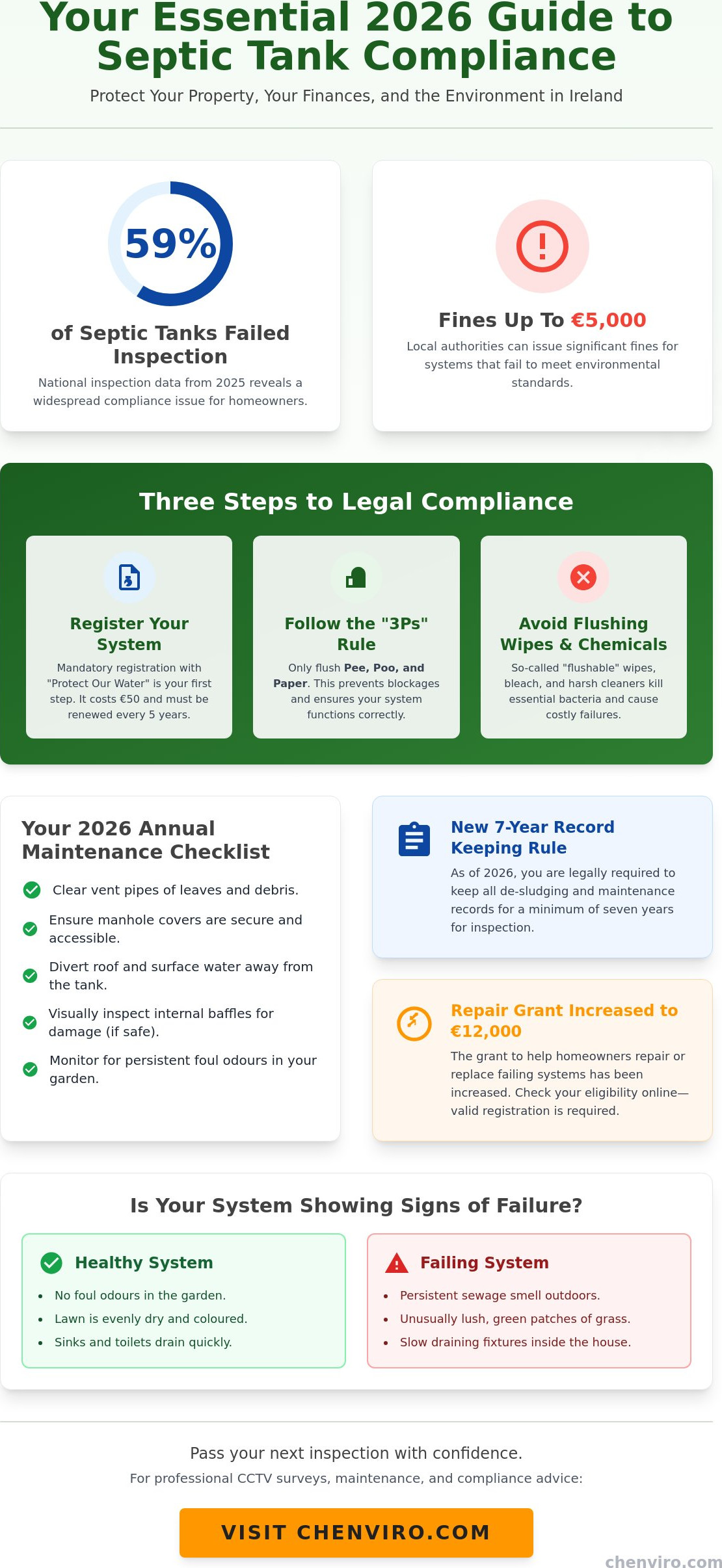
Did you know that 59% of septic tanks inspected across the country in 2025 failed to meet basic standards? It's a worrying figure for any homeowner, especially when you consider that a failed inspection can lead to an advisory notice or a fine of up to €5,000. We understand that keeping up with septic tank compliance Ireland regulations feels like a moving target. Between new European Union water policies introduced in May 2026 and updated de-sludging record requirements, it's easy to feel overwhelmed by the paperwork and the technical jargon.
You deserve to know exactly where you stand so you can protect your property and the local environment without the stress of unexpected penalties. This guide provides a clear, no-nonsense checklist for 2026 to ensure your system is fully compliant. We'll walk you through the new seven-year record-keeping rule, explain how to access the increased €12,000 remediation grant, and outline the simple maintenance steps that keep your tank running efficiently. By the end, you'll have a straightforward plan to pass your next local authority inspection with confidence and keep your system in top condition for years to come.
Key Takeaways
Learn how to navigate the registration process with "Protect Our Water" to ensure your system is fully documented and legal.
Follow our 2026 homeowner's checklist to maintain septic tank compliance Ireland and meet the latest EPA environmental standards.
Prepare for local authority inspections by identifying exactly what council officials look for during a site visit.
Understand the new legal requirement to keep de-sludging records for seven years and how to properly organise your maintenance paperwork.
Check your eligibility for the updated €12,000 grant scheme designed to help homeowners cover the costs of fixing or replacing failing systems.
Table of Contents
The Legal Essentials of Septic Tank Compliance in Ireland
Understanding the law is the first step toward peace of mind for any rural homeowner. In Ireland, the Domestic Waste Water Treatment Systems (DWWTS) regulations dictate exactly how you must manage your wastewater. These rules aren't just suggestions; they're legal requirements designed to protect our groundwater and public health. The Environmental Protection Agency (EPA) acts as the primary authority, setting the technical standards that every homeowner must follow. If you're wondering, what is a septic tank?, it's essentially a private on-site sewage facility that requires active management to stay within the law.
A major shift in standards occurred with the introduction of the 2021 Code of Practice. This document updated the requirements for new installations and upgrades, focusing on site assessments and soil suitability. For existing systems, maintaining septic tank compliance Ireland standards means ensuring your unit doesn't leak or discharge directly into ditches or streams. Ignoring these rules carries heavy risks. Local authorities conduct inspections regularly, and failure to meet the criteria can result in an advisory notice or fines reaching up to €5,000.
Registration with Protect Our Water
Every domestic wastewater system must be registered with the national "Protect Our Water" database. This is a mandatory requirement for any property not connected to a public sewer. There's a one-time registration fee of €50, and you're required to renew this registration every five years. If you've recently moved into a home in Dublin or Kildare, don't assume the previous owner completed this step. You can easily check the register online to confirm your status. Keeping your registration current is vital; you cannot apply for government repair grants without a valid registration date that meets specific deadlines.
The 3Ps Rule for System Health
Compliance isn't just about paperwork; it's about how the system functions daily. We always advise clients to stick to the "3Ps" rule: only Pee, Poo, and Paper should enter the tank. Despite what the packaging claims, "flushable" wipes are a leading cause of compliance failure in Irish homes. They don't break down, leading to blockages and overflows that attract local authority scrutiny. Similarly, harsh chemical cleaners and bleach can kill the beneficial bacteria inside your tank. This disrupts the treatment process and can lead to environmental pollution, which is a direct violation of DWWTS standards.
Your 2026 Septic Tank Maintenance Checklist
Maintaining a system isn't just about avoiding legal trouble; it's about protecting your home's value and your family's health. Whilst the legal framework provides the rules, your physical maintenance routine determines whether you'll pass or fail when the council arrives. A well-managed system is nearly invisible. A neglected one becomes a costly, smelly liability. To maintain septic tank compliance Ireland standards, you should perform a thorough walk-around of your system at least once a year.
Use this checklist to verify your system's health before it becomes an emergency:
Clear the Vents: Check that vent pipes are free from bird nests, leaves, or debris. Proper airflow is essential for the aerobic bacteria that break down waste.
Secure the Covers: Ensure all manhole covers are sound, secure, and easy to access. Cracked or buried covers are an immediate red flag for EPA septic tank inspections.
Divert Surface Water: Check that roof gutters and driveway runoff aren't piped into your tank. Excess water floods the system, preventing proper treatment and washing solids into your percolation area.
Inspect the Baffles: If it's safe to do so, check that the internal baffles are intact. These walls keep the "scum" layer where it belongs, preventing it from clogging your outlet pipes.
Monitor Odours: A healthy tank shouldn't produce a foul smell in your garden. Persistent odours usually mean the bacterial balance is off or a pipe is blocked.
If you notice any of these issues, a professional CCTV drain survey can identify internal cracks or blockages before they lead to a total system failure.
External Signs of Compliance Failure
Your garden often tells the story of your tank's health. Look for "lush" patches of grass that stay bright green even during dry spells. This usually indicates that nutrient-rich effluent is leaking near the surface. Inside the house, pay attention to gurgling sounds in the drains or sinks that take longer than usual to empty. These aren't just minor annoyances; they're early warnings that your system is struggling to process waste. If you suspect a blockage in the inlet pipe, act quickly to prevent a backup into your home.
The Percolation Area Audit
The percolation area is the most critical part of your setup for septic tank compliance Ireland. It's where the final treatment happens. To keep it functioning, never park vehicles or heavy machinery on this ground. Soil compaction prevents water from soaking through, leading to "grey water" ponding on the surface. You should also check for root intrusion. Large trees or shrubs planted too close to the drainage field can send roots into the pipes, shattering the infrastructure and requiring expensive, no-dig drain repairs to fix.
Preparing for a Local Authority Inspection
Receiving a notification letter from Meath County Council or Kildare County Council can be a source of stress for any homeowner. However, an inspection is simply a check to ensure your system isn't harming the local environment or public health. Under the current National Inspection Plan, local authorities completed 1,466 septic tank inspections in 2025. Preparation is the key to passing and maintaining septic tank compliance Ireland standards without the need for follow-up enforcement or expensive repairs.
The process usually involves a visual check of the tank's integrity and a review of your maintenance history. You must ensure that all manhole covers are accessible and not buried under soil or landscaping. Inspectors may also use tracer dyes to confirm that effluent is flowing into the percolation area rather than discharging into a nearby ditch. Have your paperwork ready; the inspector will want to see proof that your system is registered and that you have followed a regular maintenance schedule. Since 2026, homeowners are legally required to keep de-sludging records for a period of seven years, so ensure your folder is up to date.
The 10-Day Notice Period Action Plan
You'll receive at least 10 working days' notice before the inspector arrives. Use this time to conduct a "pre-inspection" walk-around. Check for the surface ponding or odours mentioned in the previous section. One common mistake is booking a septic tank cleaning for the day immediately before the inspection. We advise against this. The inspector needs to see the system operating at its normal level to check for leaks or blockages. If the tank is completely empty, they cannot verify if the internal baffles are working correctly. A professional drainage company can perform a quick check-up to identify red flags before the council official arrives.
Common Reasons for Inspection Failure
In 2025, 59% of septic tanks failed their initial inspection. Understanding why these systems failed can help you avoid the same fate. The most frequent issues include:
Missing Records: Failure to produce de-sludging receipts for the required seven-year period.
Unregistered Systems: Not having your unit on the "Protect Our Water" national register.
Environmental Pollution: Direct discharge of untreated waste into watercourses or onto the ground surface.
Structural Defects: Cracked tank walls, broken baffles, or roots blocking the percolation pipes.
If your system fails, don't panic. You will receive an advisory notice detailing the necessary repairs. As long as you address the issues within the specified timeframe, you can avoid the €5,000 fine and potentially qualify for remediation grants. Maintaining septic tank compliance Ireland is a continuous process, but being prepared for the inspector's visit makes it much more manageable.
De-sludging and Record Keeping: The Admin of Compliance
Regularly emptying your tank is the single most important task for maintaining septic tank compliance Ireland standards. It isn't just about preventing a backup; it's a legal requirement under the European Union (Water Policy) Regulations 2026. When sludge builds up, it reduces the effective capacity of your tank. This forces solids into the percolation area, which can lead to permanent soil damage and system failure. In regions like Meath and Louth, where heavy clay soils are common, this risk is even higher. Clay doesn't drain as quickly as sandy soil, so any extra solid waste can quickly overwhelm your drainage field.
You might be tempted to save a few Euro by asking a neighbour with a slurry tanker to empty your system. Don't do it. "Do-it-yourself" emptying or using unpermitted collectors is illegal. To stay compliant, you must use a contractor who holds a valid Waste Collection Permit. This ensures that the waste is disposed of at an authorised treatment facility rather than being spread on land where it could contaminate local water sources. Using a professional service like CH Enviro ensures your system is handled correctly and your paperwork is ironclad.
Frequency and Timing
The right interval for your system depends on several factors, including the number of people in your home and your tank's total capacity. You can find more detail in our guide on how often to empty your septic tank in Ireland, but generally, you should aim for a clean every one to three years. External factors also play a role. For instance, rural systems in Wicklow and Wexford often face challenges from heavy seasonal rainfall. High water tables can put immense hydraulic pressure on your tank, making regular de-sludging even more vital to prevent the system from becoming waterlogged.
The Paper Trail: Why Receipts Matter
Compliance isn't just about what you do; it's about what you can prove. Under the updated 2026 regulations, homeowners are now legally required to keep de-sludging records for a period of seven years. This is an increase from the previous five-year requirement. If a local authority inspector visits your property, they will ask to see this "paper trail" as evidence of your maintenance routine. A valid receipt must include:
The date the service was performed.
The name and Waste Collection Permit number of the contractor.
The final destination where the waste was treated.
We recommend keeping digital copies of these receipts on your phone or in a cloud folder. Physical papers can fade or get lost, but a digital record ensures you're always ready for a surprise audit. If you haven't had your system serviced recently, book a professional Septic Tank Cleaning today to ensure your records are up to date and your system remains compliant.
Upgrading Your System: Grants and Professional Repairs
If your system fails an inspection, the financial burden doesn't have to fall entirely on your shoulders. The Irish government has significantly increased the available support, with grants for repairing or replacing a septic tank rising to a maximum of €12,000 in 2024. This increase is designed to improve the rate at which faulty systems are fixed, helping more homeowners achieve septic tank compliance Ireland standards. However, eligibility is strict. You must have registered your system with "Protect Our Water" by the specified deadlines. If you missed these dates, you might find yourself disqualified from this essential funding regardless of your system's condition.
CH Enviro assists homeowners by providing the initial assessments and cleaning services required to understand a system's true condition. We don't just identify problems; we find the most efficient way to solve them. Modern repair techniques mean that a failing system doesn't always require a completely new installation or a destroyed garden. We focus on targeted repairs that restore functionality whilst keeping your costs and disruption to a minimum. Maintaining septic tank compliance Ireland is much easier when you move away from reactive fixes toward a structured, professional maintenance plan.
Navigating the Grant Application
The process begins when you receive an "Advisory Notice" following a local authority inspection. This document outlines exactly why your system failed and what needs to change. There are different grant categories available, such as those for "High Status Objective Areas" or "Priority Areas" where water quality is under particular threat. Before you apply, professional septic tank cleaning Kildare Meath is often the first logical step. It allows for a clear view of the tank's internal structure, ensuring any grant application is based on accurate, verified data rather than guesswork. This thoroughness is exactly what council officials expect to see in a remediation plan.
Professional Solutions for Compliance
Traditional repairs often involved heavy machinery and deep trenches that could ruin your landscaping for months. Today, we use CCTV surveys to pinpoint structural cracks or root damage without digging a single hole. If the survey reveals a leak or a broken pipe, no dig drain repair Dublin is often the preferred choice. This trenchless technology allows us to reline damaged pipes from the inside, sealing leaks and restoring the integrity of your system in a fraction of the time. It's a cleaner, faster, and more cost-effective way to ensure your property remains environmentally safe and fully compliant with current EPA standards.
Don't wait for an inspection letter to arrive before taking action. Book a compliance check with CH Enviro today to secure your system's future and protect your investment.
Secure Your Property and Your Peace of Mind
Achieving septic tank compliance Ireland doesn't have to be a source of anxiety. By keeping your registration current and maintaining a solid seven-year paper trail of de-sludging receipts, you've already won half the battle. This commitment to transparency is a vital form of accountability; in a similar vein, Core Integrity helps organisations build cultures of trust and transparency in their wider operations. Proactive habits like regular visual inspections and adhering to the "3Ps" rule will protect your percolation area from the soil compaction and blockages that lead to expensive system failures.
CH Enviro is here to handle the technical details for you. As fully permitted waste collectors with expert knowledge of Irish EPA standards, we've been serving homeowners across Dublin, Meath, and Kildare since our inception. We know exactly what local authority inspectors look for and how to keep your system in peak condition. Ensure your septic tank is compliant with CH Enviro’s expert cleaning and inspection services.
Don't wait for an advisory notice to arrive in the post. Take control of your home's wastewater management today. With a bit of foresight and the right professional support, you can keep your system running efficiently and safely for many years to come.
Frequently Asked Questions
Do I have to register my septic tank in Ireland if it was installed before 2012?
Yes, you must register your domestic wastewater treatment system regardless of when it was installed. The law requires every system not connected to a public sewer to be listed on the "Protect Our Water" national register. This remains a mandatory requirement for all homeowners to ensure that every private system is accounted for and monitored by local authorities.
Can I get a grant to replace my septic tank if it is polluting?
You can qualify for a remediation grant of up to €12,000 if your system fails a local authority inspection and receives an advisory notice. Eligibility depends on your system being registered by the correct deadline. These grants are specifically designed to help homeowners fix systems that pose a risk to groundwater or public health.
How much is the fine for an unregistered septic tank in Ireland?
The fine for failing to register your system can reach up to €5,000. Paying the one-time €50 registration fee is a simple way to avoid this penalty and is a vital step in achieving septic tank compliance Ireland. Keeping your registration current also ensures you remain eligible for government financial support if repairs are ever needed.
Will my septic tank be inspected if I do not register it?
Yes, your system can be inspected even if you haven't registered it. Local authorities use environmental risk maps to target inspections in areas where groundwater or surface water is at high risk. Being unregistered does not protect you from a visit; in fact, it may lead to immediate enforcement action and the fines mentioned above.
What happens if my septic tank fails a local authority inspection?
You will receive an official advisory notice that outlines the specific defects found and the repairs required. You'll be given a fixed period to complete these works. Once the repairs are finished, you must notify the council, who may perform a follow-up check to confirm the system now meets the required environmental standards.
Can I empty my own septic tank on my own land?
No, it is illegal to empty your own tank or spread the waste on your property. You are legally required to use a contractor who holds a valid Waste Collection Permit. This ensures the sludge is safely transported to an authorised treatment plant, preventing the spread of pathogens and the contamination of local water sources.
How long do I need to keep my de-sludging receipts for?
Under the European Union (Water Policy) Regulations 2026, you must now keep de-sludging records for a period of seven years. This is a critical part of septic tank compliance Ireland and provides the necessary proof of maintenance during an inspection. We recommend storing these receipts in a dedicated folder or a secure digital backup.
Is there a specific distance a septic tank must be from a house in Ireland?
The 2021 Code of Practice states that a septic tank should generally be located at least 7 metres from a dwelling. There are also mandatory "separation distances" from other features, such as 10 metres from a watercourse and at least 3 metres from a property boundary. These distances are essential to prevent structural damage and protect the surrounding environment.


Comments